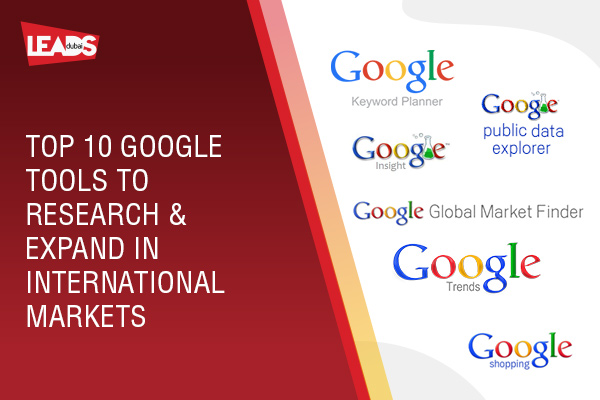
Google tools to research and expand into international markets
Short answer: use Google Trends and Keyword Planner to compare demand, then check Google Analytics 4 and Search Console for markets already finding you. Google Ads forecasts and small geo-targeted tests help validate cost and lead quality. No single tool proves a country will be profitable.
There are billions of people online worldwide and millions of businesses competing for them. Would you not like to add some of them as customers? Before you spend a dirham entering a new market, these free Google tools help you research demand, find the right countries, and understand what people there search for and buy. You can grow a global business today like never before possible.
1. Google Trends
A great starting point. Compare how interest in a product or topic changes across countries and over time, and spot rising trends early. It gives strong local insight, see our post on Ramadan digital trends for what people search during the holy month.
2. Google Keyword Planner
Keyword Planner shows how many searches happen for your products or services in any country. It is one of the best ways to test real demand before you enter a market.
3. Google Ads Insights
The Insights page can show search trends, demand forecasts and search-term themes relevant to an active account when enough data is available. Treat these as signals to investigate, not a complete market forecast.

4. Performance Planner
Performance Planner forecasts how changes to budget and campaign settings may affect Google Ads results. Forecasts depend on past and auction data, so compare them with your own margins and conversion rates.
5. Google Analytics 4
Your own GA4 data is a goldmine for expansion. Its geographic reports show which countries already visit and convert on your site, often revealing demand you did not know existed.
6. Google Search Console
Search Console shows the countries and queries that already find you in organic search. If a market is sending you impressions before you have done anything, that is a strong signal to look closer.
7. Google Merchant Center and Shopping
If you sell products, Merchant Center and Google Shopping show what people buy and how listings perform in different countries, useful for planning which products to push where.
8. Google Ads location tests
Google Ads lets you test one country or city and measure the response. Check the location setting carefully, because targeting people in a place is different from targeting people who show interest in it. Review qualified leads by market, not clicks alone.
9. Think with Google
Think with Google publishes consumer-insight data, research, and benchmarks by region. It is a good way to understand how people in a market behave online before you commit.
10. Google Translate for initial research
Google Translate can help build an initial keyword list or understand a page. It should not be the final copywriter. A native reviewer should check search intent, tone, legal wording and the offer before launch.
Use the tools as a sequence
Start with demand, then validate fit. Compare countries in Trends, build local keyword lists, check your existing traffic, estimate costs and run a controlled test. A market belongs on the expansion plan only when demand, fulfilment, regulation, margin and lead quality all make sense.
You can add even more context from sources like the International Monetary Fund, the CIA World Factbook, eMarketer, and national statistics bureaus such as the UK’s ONS.
At Leads Dubai we believe every marketer should use these tools to make better marketing and business decisions. Contact us for a consultation, call +971 4 338 6940.