
Online retail is well established in the UAE, but having a store does not guarantee sales. Retailers still need a fast buying experience, clear delivery and returns, suitable payment choices and marketing that reaches people with the right level of intent.
The state of e-commerce in the UAE
Short answer: ecommerce marketing in the UAE combines SEO, Google Shopping, paid social, email and marketplaces to drive traffic and sales. The right mix depends on your products, margins, repeat-purchase rate and audience. Measure completed orders and contribution margin, not traffic alone.
A few dynamics make this the time to invest:
- Customers expect the store, checkout and order updates to work properly on mobile.
- Cash on delivery remains relevant for some audiences, while cards and digital wallets reduce checkout steps for others.
- Marketplaces like Noon, Amazon.ae, and Carrefour compete alongside brand-direct stores.
- Faster delivery and social discovery can raise expectations, but availability differs by category and location.
These dynamics create both opportunity and competition. Standing out takes a strategic, integrated approach, not just having a store.
Build an online store that converts
Your website is the foundation. Without a high-converting store, marketing delivers diminishing returns.
Platform: Shopify and Shopify Plus for ease and scale, WooCommerce for WordPress flexibility, Adobe Commerce (Magento) for enterprise needs, BigCommerce for complex catalogues, or Arabic-first local platforms like Salla and Zid for the GCC.
Design and experience:
- Clean, on-brand design with mobile-first responsive layouts. Confirm the mobile share using your own analytics.
- Fast loading (target Largest Contentful Paint under 2.5 seconds).
- Intuitive navigation, clear categories, and working search.
- High-quality product photography and detailed descriptions.
- Reviews and ratings shown prominently, plus trust signals (SSL, secure-payment badges, return policy).
- Live chat or WhatsApp support.
- An Arabic version with proper right-to-left rendering, and AED pricing.
Checkout:
- Guest checkout, one-page checkout, and large mobile tap targets.
- Multiple payment methods: cards, Apple Pay, Google Pay, Tabby, Tamara, and COD.
- Address auto-fill, clear shipping costs and timelines, and order tracking by SMS and WhatsApp.
- An easy returns process and reassurance messaging at payment.
Local UAE considerations: COD to build trust with new buyers, Buy Now Pay Later (Tabby and Tamara) as standard, fast same-day or next-day delivery in major cities, VAT-compliant invoicing, and a free-shipping threshold tuned to local expectations.
A well-built store removes friction at every step, which lifts both conversion rate and average order value.
E-commerce marketing solutions: a multichannel approach
Successful e-commerce marketing combines several channels. The core solutions every Dubai retailer should consider:
SEO: keyword research for commercial intent (“buy”, “best”, “price”), optimised product and category pages, product schema markup, internal linking, blog content answering buyer questions, local SEO for physical stores, and Arabic SEO for the GCC.
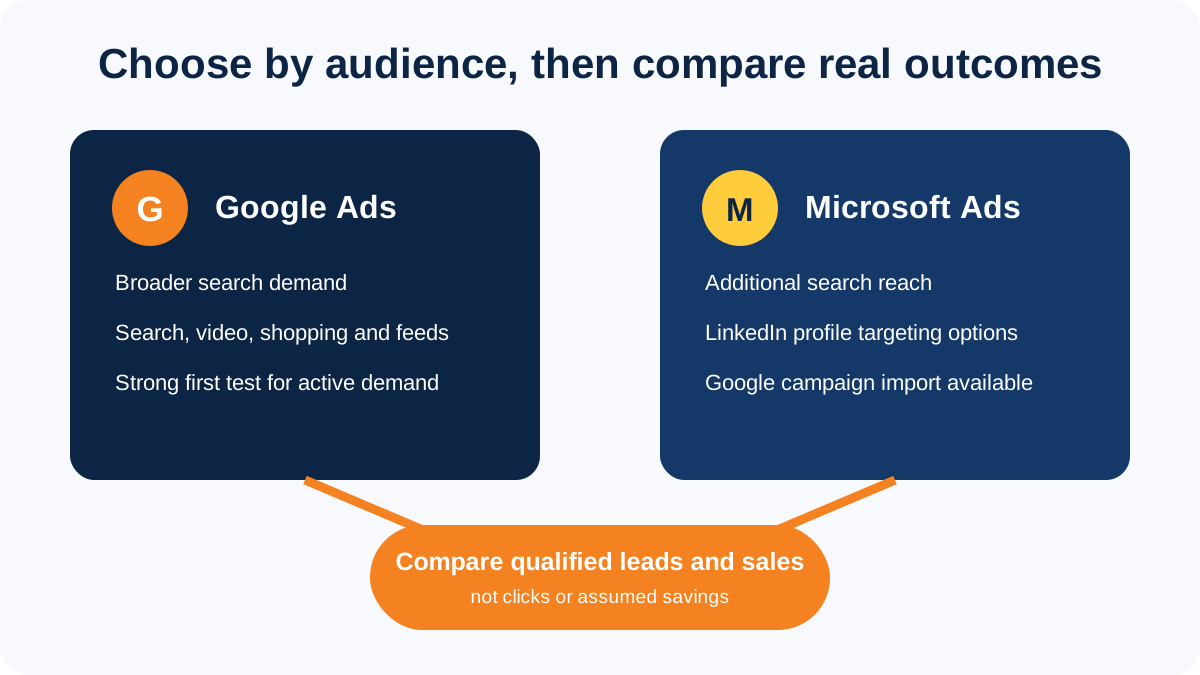
Paid search: Google Shopping ads showing products with images and prices, search ads for high-intent keywords, Performance Max across Google’s networks, brand-defence campaigns, remarketing, and YouTube for product storytelling.
Social media: Instagram Shopping with tagged products, Facebook Shops, TikTok Shop, Pinterest for visual discovery, Snapchat (strong in the UAE), WhatsApp Business, influencer partnerships, and user-generated content.
Marketplaces: list and optimise on Noon, Amazon.ae, and Carrefour Online, run sponsored product ads, manage pricing and inventory across channels, and protect your ratings with great service.
Content marketing: buying guides, comparison content, lifestyle and video content, and UGC that builds authentic social proof.
Affiliate and partnerships: affiliate programs, coupon and deal sites, loyalty partnerships, and cross-promotion with complementary retailers.
Most successful UAE brands combine four to six of these into one integrated strategy. For the retention side, email is the highest-ROI channel of all, covered in depth in our guide to email marketing for e-commerce.
Solutions for online retail excellence
Beyond individual channels, excellence comes from integrated systems:
- CRM to centralise customer data and enable personalised marketing.
- Marketing automation to trigger campaigns from behaviour across email, SMS, and push.
- Analytics and attribution with GA4, enhanced e-commerce tracking, and multi-touch attribution.
- Personalisation engines for product recommendations and dynamic content.
- Customer service tools: live chat, WhatsApp Business API, and helpdesk platforms.
- Inventory and order management synced across channels for fast delivery.
- Loyalty and retention: points, tiers, referrals, and subscription models.
- Conversion rate optimisation: A/B testing, heatmaps, exit-intent offers, and mobile checkout improvements.
These turn scattered tactics into a coordinated, scalable system.
Adapt to your retail category
Different categories need different angles:
- Fashion: lifestyle photography on models, size guides to cut returns, influencer partnerships, and AR try-ons.
- Electronics: detailed specs and comparisons, video demos, strong warranty info, and bundle cross-sells.
- Beauty: ingredient education, before-and-after content, tutorials, and subscriptions for replenishment.
- Home and living: styled room photography, 360-degree and AR placement, and inspiration content.
- Food and grocery: quick-commerce delivery, recipe content, and subscriptions.
- Luxury: premium photography and brand storytelling, curated experiences over discounts, and white-glove service.
Matching your marketing to your category sharply improves relevance and results.
Trends shaping e-commerce
- AI-powered personalisation: individual homepages, recommendations, and email content for every customer.
- Conversational commerce: WhatsApp, Instagram DMs, and chatbots becoming primary channels where customers research and buy.
- Live shopping and video commerce: real-time demos and purchasing on Instagram and TikTok.
- AR shopping: virtual try-ons and furniture placement becoming standard.
- Quick commerce expanding beyond groceries, making speed a competitive edge.
- Sustainability and ethics influencing younger UAE shoppers.
- Social commerce maturing into native in-app buying.
- Subscriptions and memberships for recurring revenue.
- Privacy-first marketing built on first-party data as third-party cookies fade.
Measure what matters
Track the metrics tied to the business, not vanity numbers:
- Acquisition: traffic by source, cost per acquisition, and return on ad spend.
- Conversion: overall conversion rate, add-to-cart rate, and cart abandonment.
- Revenue: total revenue, average order value, and revenue per visitor.
- Customer: acquisition cost, lifetime value, and the LTV:CAC ratio (aim for 3:1 or better), plus repeat-purchase rate.
- Email and retention: open, click, and conversion rates, and revenue per email.
Use them to drive continuous optimisation, not just reporting.
Work with an e-commerce partner
Winning in the UAE’s e-commerce market takes the right platform, an integrated marketing mix, a great customer experience, and constant optimisation. We help Dubai retailers build, market, and scale online stores that grow. See our retail marketing strategies for more, or call +971 50 304 7470.