
How PPC generates B2B leads
Short answer: B2B pay-per-click works differently from B2C. Search volumes are lower, buying cycles run for months and several people sign off on the purchase, so the win comes from tight intent keywords, content aimed at the research stage, and tracking that follows a lead all the way to a closed deal rather than stopping at the form submission.
Getting leads online for B2B and B2C is not the same job. Someone searching for an online course decides in an afternoon. Someone searching for ERP software is starting a process that will run for six months and involve a finance director who has not searched for anything yet.
That shows up in the numbers. B2B queries are fewer, vaguer and spread across a longer cycle. What makes them worth chasing is order value: a single B2B deal can be worth more than a year of B2C conversions, which is why a cost per lead that looks alarming next to consumer benchmarks can still be comfortably profitable.
Build the keyword list around intent
The instinct is to bid on the category. The category is where the browsers, students and competitors are.
- Name the product the way a buyer does. “Warehouse racking supplier Dubai” filters better than “warehouse racking”.
- Bid on the problem as well as the product. Many B2B buyers search a symptom before they know the category name.
- Cover the variations. Buyers search by specification, capacity, standard or brand compatibility. These terms are cheap because nobody else bothers with them.
- Negative keywords do heavy lifting here. Strip out jobs, salaries, courses, free, DIY and competitor staff research, or a low-volume campaign fills with the wrong traffic quickly.
Do not only advertise at the bottom of the funnel
Bottom-of-funnel terms in B2B are few and expensive, and every competitor is bidding on them. The volume sits earlier, in “how”, “why”, “vs” and “best” searches from people who are still working out what to buy.
Those searchers will not fill in a quote form. Give them something worth their email instead: a comparison page, a specification guide, a pricing explainer, a case study from their sector. You get an early relationship on a cheaper click, and remarketing keeps you in front of them for the months it takes them to decide.
Remarketing matters more in B2B than almost anywhere else, precisely because the cycle is so long. Someone who read a comparison page in March may be ready to buy in September.
Where to advertise beyond Google Search
- LinkedIn. The only platform where you can target by job title, seniority, company and company size, which is as close as advertising gets to naming your buyer. Straight sales ads perform badly here. Demos, research and case studies perform well.
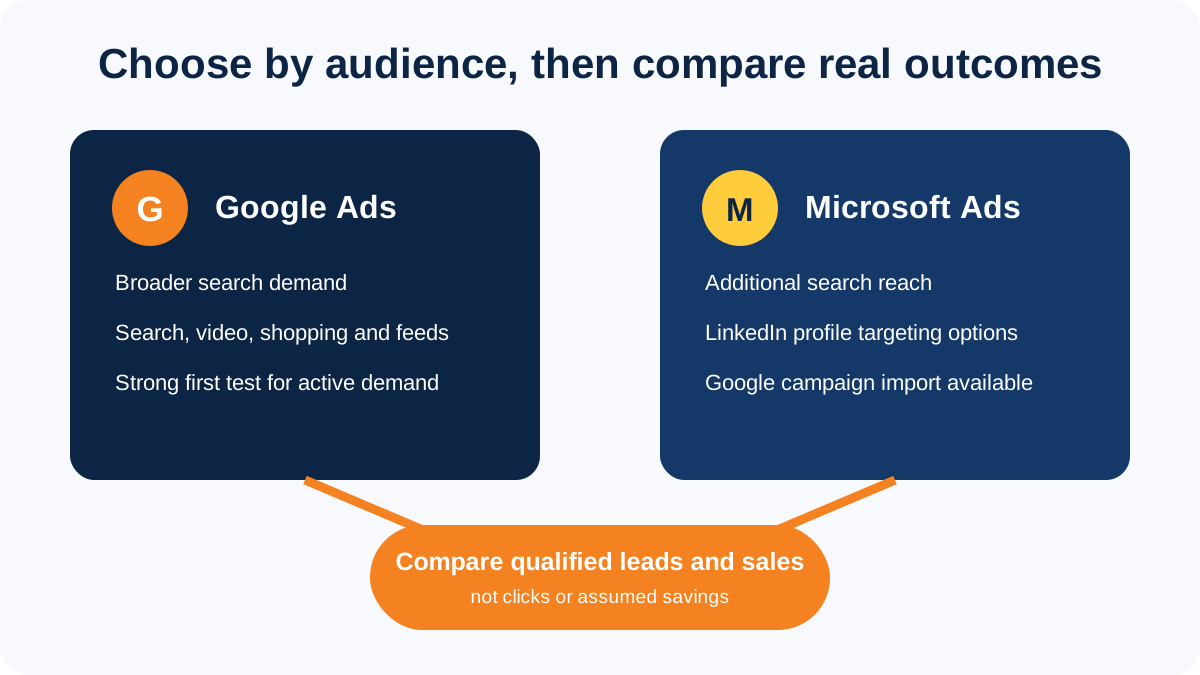
- Microsoft Advertising. Worth testing for B2B because a large share of its traffic comes from work computers running Edge on default settings. Clicks are usually cheaper than Google and the audience skews toward office desktops.
- Meta. Better for B2B than its reputation suggests, mainly through lookalike audiences built from your existing customer list rather than through interest targeting.
- Display and YouTube. Use these for remarketing to people who already visited, not for cold prospecting.
The real problem: judging lead quality
Most B2B accounts are not short of leads. They are short of a way to tell which leads were worth having. That is hard for reasons specific to B2B:
- The sales cycle outlasts the reporting window, so the ad that started the deal looks like it failed.
- Lead volume is low enough that a handful of bad ones distort the average.
- Several touchpoints precede the enquiry, and the last click takes credit for all of them.
- Nobody has calculated what a customer is actually worth over their lifetime, so there is no benchmark to judge cost per lead against.
The fix is to stop optimising toward form fills. Import your closed deals back into Google Ads as offline conversions, so the platform learns which clicks produced revenue rather than which produced enquiries. It takes a working CRM and a bit of setup, and it changes what the bidding optimises toward more than any keyword change will.
Feed it the value too, not just the fact of the sale. An account told that one lead was worth AED 400 and another AED 90,000 will bid very differently from one told it received two leads.
At Leads Dubai, a Google Ads management company in Dubai, we set up that tracking before we touch the campaigns, so you can generate leads and know which ones paid for themselves.
See it on a real account
We ran this for a UK perimeter security manufacturer selling turnstiles into the Arab states, with no local office and no regional brand recognition. The campaign reached buyers in eleven markets, and the biggest source of clicks was not the one anyone predicted. Numbers, country breakdown and what we told the client to change afterwards are all in the B2B Google Ads case study.
B2B PPC: common questions
Yes. PPC is one of the fastest ways to reach B2B buyers who are actively searching for a solution. By bidding on high-intent keywords and sending clicks to a focused landing page with a clear enquiry form, you can generate qualified B2B leads within days rather than months.
It varies widely by industry and deal size. B2B leads usually cost more than B2C because the audience is narrower and the deal value is higher. What matters is the ratio of lead value to cost: a higher cost per lead is fine when the lifetime value of a client is large.
Target specific, high-intent keywords, add negative keywords to filter out consumers and job seekers, use lead forms that ask a qualifying question, and track which keywords produce real sales, not just form fills. Feeding that conversion data back into the account improves lead quality over time.
Rarely without close supervision. B2B buyer pools are small, so a broad match keyword in a niche category will pull in students, job seekers and consumers looking for something unrelated, and each of those clicks costs you the same as a real prospect. Start on phrase and exact match, read the search terms report weekly, and only widen once the negative keyword list is doing its job.