FAQs - types of SEO you actually need to know about
The primary types of SEO are On-Page SEO, Off-Page SEO, Technical SEO, and Local/Ecommerce/Enterprise SEO depending on your business model. Together, they help improve visibility, authority, and user experience.
On-Page SEO helps search engines understand what your page is about. By optimizing titles, meta tags, headings, and content, your pages rank higher and attract more relevant searchers.
Off-Page SEO builds trust and authority through backlinks, brand mentions, and digital PR. When reputable sites point to yours, Google sees your business as more credible, helping you rank higher.
Technical SEO ensures search engines can crawl, index, and display your site properly. It includes site speed, mobile-friendliness, security, structured data, and fixing errors that hurt rankings.
Local SEO focuses on improving visibility in local map searches and “near me” results. It’s essential for physical locations like restaurants, clinics, salons, and service businesses.
Then you should prioritize Ecommerce SEO, optimizing product and category pages, fixing duplicate content, improving navigation, and ensuring fast checkout for better rankings and sales.
Yes. Enterprise SEO involves automation, scalable content systems, and crawl-budget management to support thousands or millions of pages efficiently.
Typically 6-12 months, depending on competition, content quality, and consistency. SEO is a long-term investment that delivers compounding growth over time.
No. SEO also includes site structure, performance, user behavior signals, reviews, authority, and security. It’s a mix of creative, technical, and strategic work, not just keywords.
Both work together. Paid ads bring instant leads, while SEO builds sustainable organic traffic. Many successful businesses use a healthy balance of both.
Begin with an SEO audit. Fix technical issues first, then optimize on-page content, and finally invest in off-page authority building.
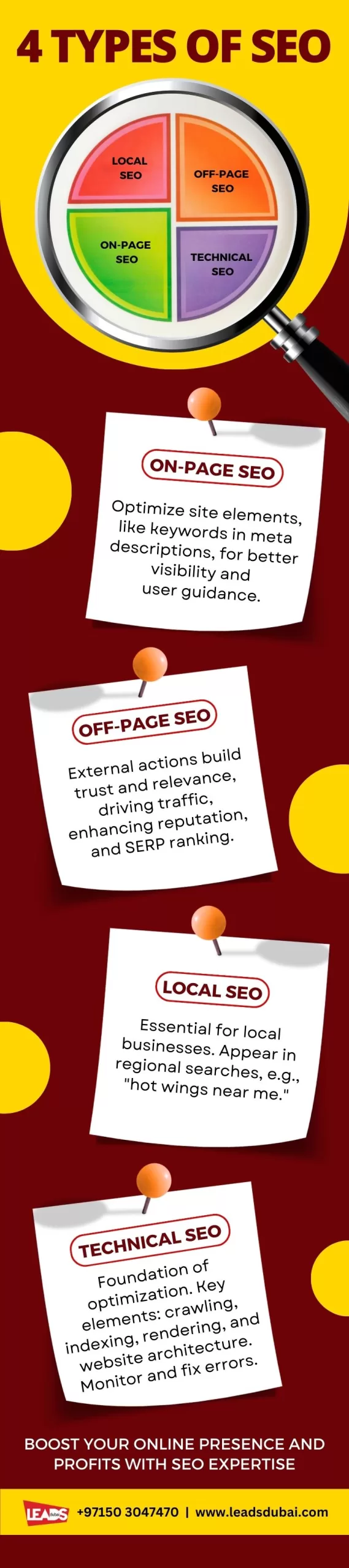
Search engine optimization covers several kinds of work that pull in the same direction. Splitting them into four types makes it easier to see which one your site is actually short of.
Short answer: the four types of SEO are on-page, off-page, local and technical. On-page is what sits on your pages. Off-page is the trust you earn everywhere else. Local decides whether you appear in map results near a searcher. Technical keeps the site crawlable and fast. Most sites need all four, in that order of effort.
On-Page SEO
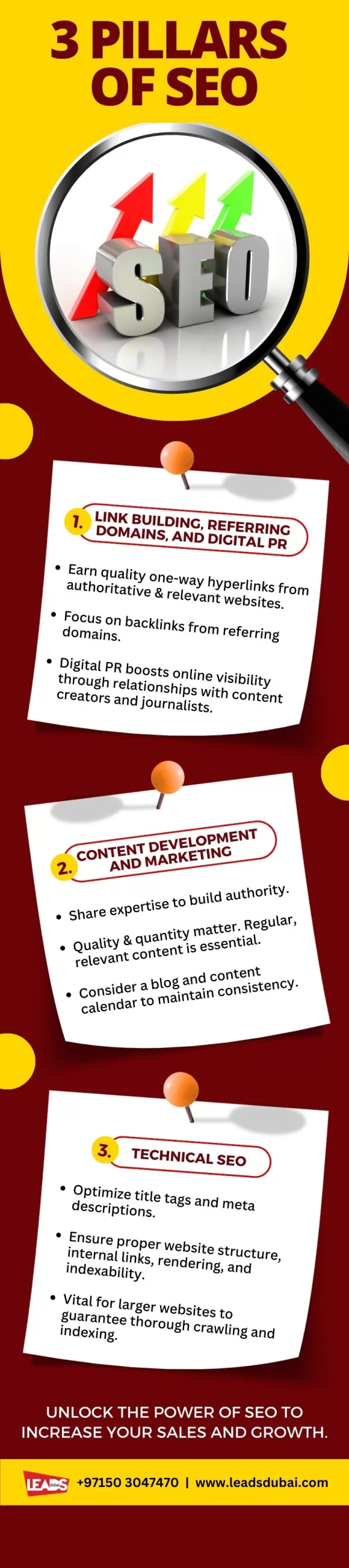
On-page SEO is everything a visitor and a crawler can read on the page itself. It is the cheapest type to fix because nothing depends on anyone outside your business.
- Write a title tag and meta description that describe the page and earn the click.
- Use one H1 and a heading order that follows the content, not the styling.
- Target the wording people actually search, matched to what they want at that moment.
- Answer the question in the first hundred words rather than after four paragraphs of preamble.
- Give every image a descriptive alt attribute and link related pages to each other.
The tags that do the work
Tags are how you tell a search engine what a page is about and how it fits with the rest of the site.
- Title tag. The line shown in search results. Keep it near 60 characters so it survives without being cut, and put the subject at the front.
- Header tags. H1 down to H6 break a page into sections a reader can skim. They also give Google a clear outline of the page, which is why a heading that says “Pricing” beats one that says “The details”.
- Image alt text. A plain description of what the image shows. It serves screen readers first and image search second.
- Blog post tags. These are a CMS taxonomy rather than an HTML tag. Used carefully they help internal linking. Used loosely they generate archive pages that list one post each, and a pile of near-empty pages is a liability rather than an asset. Keep the tags you use repeatedly and drop the rest.
Off-Page SEO
Off-page SEO is the part you cannot edit directly. It is what other sites, directories and customers say about you, and it is the strongest signal Google has that a business is real.
- Links from sites with their own audience, earned through work worth citing.
- Brand mentions and press coverage, including UAE trade titles and local news.
- Reviews on your Google Business Profile and the platforms your industry uses.
- Accurate listings on directories that people in the Emirates actually check.
Paid link schemes are the usual shortcut, and Google’s link spam policy treats bought links as manipulative whether or not money changed hands. Driving traffic through borrowed authority tends to cost more later than it saves now.
Local SEO
Local SEO decides whether you show up when somebody nearby searches for what you sell, for example “orthodontist near me” from a phone in Al Barsha or “car service Business Bay”. Google ranks these results on three things: relevance, distance and prominence. You cannot move your premises, so the work sits in the other two.
- A complete Google Business Profile with correct categories, hours and photos.
- The same name, address and phone number everywhere it appears.
- A steady flow of genuine reviews, and replies to them.
- Pages that name the areas you serve, with content specific to each one rather than the same paragraph with the district swapped out.
There is more detail in our guide to local SEO in Dubai.
Technical SEO
Technical SEO is the layer that lets the other three count. If Google cannot crawl a page, nothing on it matters.
- Crawling and indexing: an accurate sitemap, a robots.txt that does not block what you want found, and canonical tags pointing the right way.
- Rendering: content that exists in the HTML rather than appearing only after JavaScript runs.
- Site architecture: important pages reachable within three clicks of the homepage.
- Core Web Vitals: LCP under 2.5 seconds, INP under 200 milliseconds and CLS under 0.1. INP replaced First Input Delay in March 2024, so older checklists measure something Google no longer uses.
- HTTPS across the whole site, with no mixed content.
- Structured data where it applies, so listings, FAQs and courses can qualify for richer results.
Types of SEO by business model
The four types above apply to everyone. What changes is the weighting, and two business models need work the standard checklist does not cover.
Ecommerce SEO
Built for online shops and D2C brands, where the money sits on product and category pages.
- Unique copy on category pages, which are usually the ones with search volume behind them.
- Canonical tags for products that appear under several categories or in size and colour variants.
- Product schema carrying price, availability and rating.
- A checkout that stays fast on a mobile connection.
Enterprise SEO
Built for large sites, portals and multi-location brands, where the constraint is scale rather than ideas.
- Template changes that fix thousands of pages at once.
- Crawl budget managed so Google spends its time on pages that earn.
- Automated monitoring, because nobody audits fifty thousand URLs by hand.
- A working agreement between the SEO, development and content teams, which is usually the real bottleneck.
Where to start
Running all four at once is how budgets disappear. The order that works:
- Audit the site and list what is broken.
- Fix the technical faults blocking crawling or indexing.
- Optimise the pages that already sell for you before writing anything new.
- Publish content that answers questions your customers ask on calls.
- Earn links and reviews once there is something worth linking to.
- Measure enquiries and revenue, not rankings.
Results build over six to twelve months. Anyone offering a guaranteed number one position in six weeks is selling the promise, not the outcome.
Boost your online presence and profits with SEO expertise from Leads Dubai.