Explore the key advantages and limitations of outdoor advertising. Learn how billboards and OOH media boost brand awareness while understanding challenges like cost and measurability.
Advantages of outdoor advertising
Short answer: outdoor advertising’s main advantages are broad reach, high frequency, a 24/7 presence and strong brand recall in a chosen area. Its limits are less precise targeting than digital, harder direct measurement, and the need for very simple creative. It works best alongside online channels.
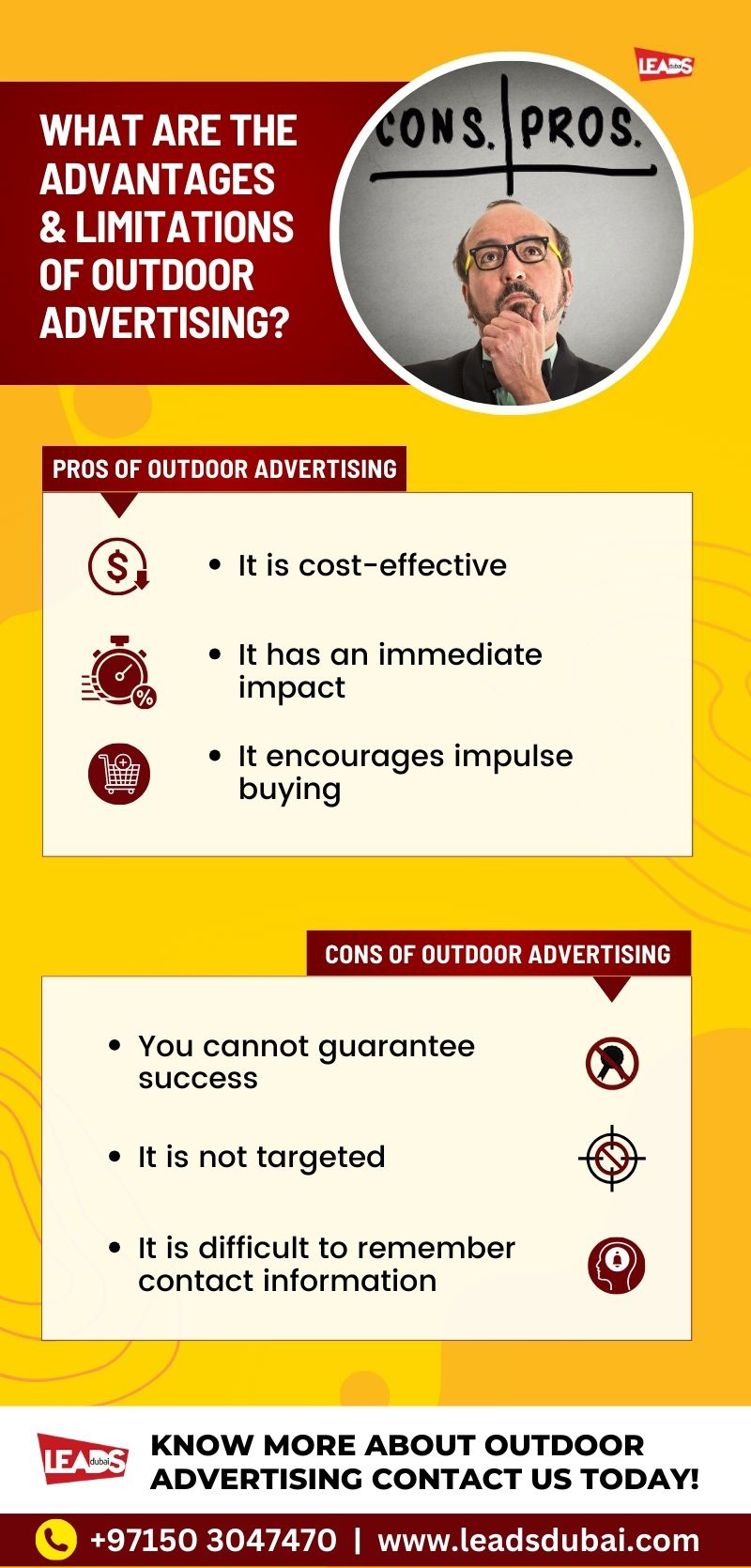
- High visibility and 24/7 exposure. A billboard works around the clock and cannot be skipped, blocked or scrolled past.
- Broad reach in high-traffic areas. One well-placed site can be seen by hundreds of thousands of people a day.
- Low cost per impression. The cost of reaching each person is low compared with most other media.
- Strong brand recall. Large format and repeat exposure build recognition, especially on a daily commute.
- Local targeting. You can pick the exact roads, malls or neighbourhoods your customers travel.
Limitations of outdoor advertising
- Harder to measure. There is no click, so you track lift in search, footfall, promo codes and brand surveys instead.
- Less flexible. Static sites cannot change quickly, though digital OOH now solves much of this.
- Short dwell time. You get a few seconds, so the message has to be simple.
- Weather and clutter. Visibility can drop in bad weather or where many ads compete for attention.
Additional insights on outdoor advertising
Outdoor advertising encompasses various formats including billboards, transit ads, street furniture, and digital out-of-home (DOOH) displays. Each offers different reach, cost profiles, and creative possibilities. When planning an outdoor advertising campaign, consider factors like location traffic volume, audience demographics, creative format, and campaign duration to maximize your return on investment.
Outdoor advertising continues to be a powerful channel for brand awareness and customer reach. While it comes with limitations around measurement and flexibility, the advantages of high visibility, cost-effectiveness, and 24/7 exposure make it a valuable part of any comprehensive marketing strategy. Understanding both the benefits and drawbacks will help you make informed decisions about including OOH in your advertising mix.
Looking for outdoor advertising solutions in Dubai? Contact Leads Dubai to explore billboard, LED screen, and digital OOH options that fit your budget and goals.FAQs
The main advantages include high visibility and 24/7 exposure, broad audience reach in high-traffic areas, cost-effectiveness compared to other media, and strong brand recognition. The disadvantages include difficulty measuring ROI precisely, limited flexibility to change messages quickly, weather vulnerability that can reduce visibility, and visual clutter in areas with many competing ads.
Static billboard costs in the UAE range from approximately 10,000 to 50,000 AED per month depending on size and location. Digital billboards with dynamic capabilities cost between 20,000 and over 100,000 AED per month. Prime locations like Sheikh Zayed Road command premium pricing, while less trafficked areas offer more affordable options for smaller budgets.
Digital out-of-home advertising offers several advantages over traditional billboards, including the ability to display multiple ads in rotation, schedule content for specific times of day, and update creative remotely without physical installation costs. Research shows that 76% of DOOH ad viewers take action after seeing an ad. However, traditional billboards still offer dedicated single-brand visibility and can be more cost-effective for long-term placements.
While outdoor advertising lacks the direct click-tracking of digital ads, effectiveness can be measured through several methods: branded search volume lift during campaign periods, foot traffic analysis using mobile location data, coupon or promo code redemptions, website traffic increases correlated with campaign timing, and post-campaign brand awareness surveys. Many DOOH platforms now offer programmatic buying with audience measurement tools.
Businesses with broad consumer appeal benefit most from outdoor advertising, including retail stores, restaurants, real estate developers, automotive brands, tourism and hospitality companies, and consumer goods brands. Local businesses can effectively use outdoor ads near their locations to drive foot traffic, while national brands use highway billboards and transit advertising for mass brand awareness campaigns.
This is one of many out-of-home formats. See the full outdoor advertising in Dubai guide to compare formats, locations and costs.