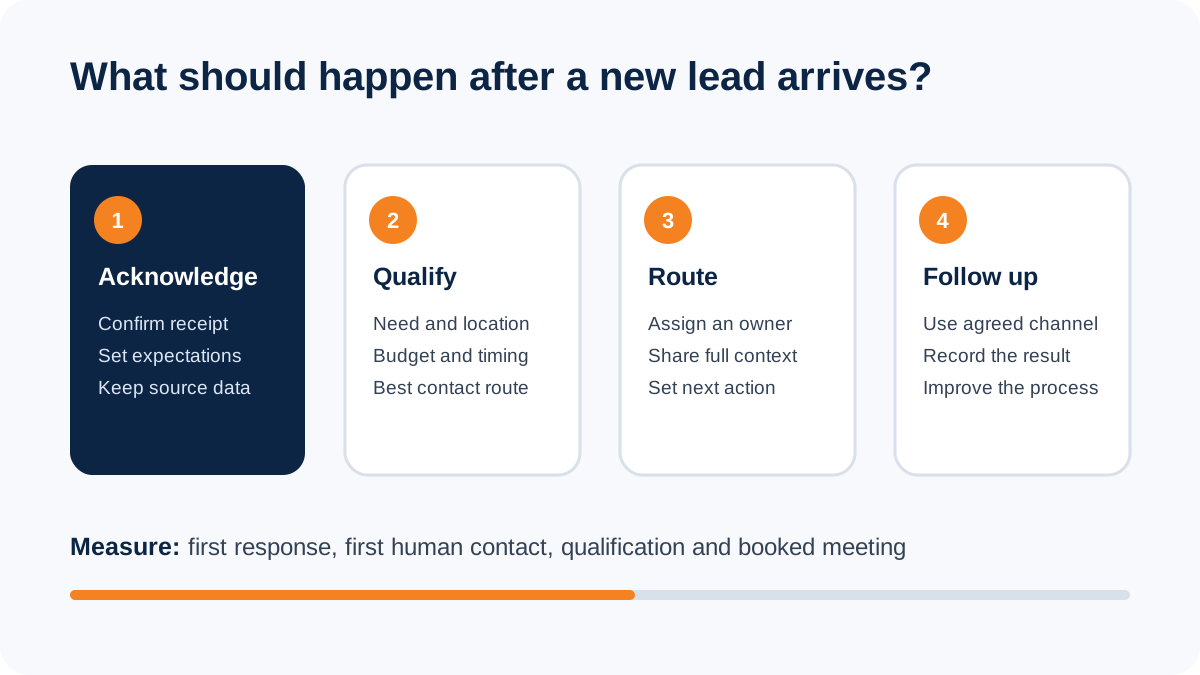
Short answer: speed to lead is how quickly your business gives a useful response after an enquiry. The goal is not to call every person within seconds. It is to acknowledge the request, keep its source and context, qualify it, and put it with someone who can help while the customer still remembers why they contacted you.
A lead from Google Ads, WhatsApp or a website form may also be speaking to other suppliers. Slow follow-up gives the customer time to move on. Rushed follow-up can be just as poor if the caller has not read the enquiry or asks the person to repeat everything.
What a fast response should contain
The first response should confirm that the enquiry reached the right business and explain what happens next. If it is automated, say so plainly. Use it to set an expectation, not to pretend a salesperson is already handling the request.
A useful acknowledgement can include:
- the service or request received
- the expected response window
- the name or team that will reply
- one important qualification question
- an option to choose call or WhatsApp
Avoid sending a long sales pitch before you understand the enquiry.
Build one route for each lead source
Start by listing every place an enquiry can arrive. This often includes website forms, click-to-call ads, WhatsApp, Meta lead forms, LinkedIn forms and marketplace messages. Assign an owner and backup for each source.
Keep the campaign, page and service information attached to the lead. A salesperson should know that someone asked about taxi advertising, for example, rather than receiving a record labelled only “website lead”. Better context produces a better opening conversation.
Our AI calling agent service can acknowledge and qualify suitable enquiries when the team cannot respond immediately. It should support the sales process, not hide the fact that automation is being used.
Decide what needs a call and what does not
Someone who asks for an urgent quote and selects “call me” may need prompt human contact. A person downloading information at midnight may prefer a confirmation and a call during business hours. Follow the channel and timing requested wherever possible.
Use a small qualification set: service needed, location, timing and one commercial-fit question. Do not turn the first interaction into an interrogation. Questions should help route the enquiry or prepare the right answer.
Measure quality as well as response time
Time to first response is only the first number. Track:
- Time to acknowledgement
- Time to first human contact
- Percentage successfully contacted
- Percentage meeting the agreed lead criteria
- Meetings, quotations and sales
A team can improve the first number by sending an instant message while making no improvement to sales. Review the whole path. If leads are contacted quickly but few qualify, inspect targeting and the form. If qualified leads receive no quotation, inspect the sales handover.
A simple implementation plan
Choose one high-volume lead source and document what happens today. Remove duplicate notifications, assign ownership and write a short acknowledgement. Test the route during office hours and after hours. Then review ten real enquiries with the sales team.
For form enquiries that need quick screening, see our AI form caller. If the broader problem is lead volume or quality, our lead generation services explain how we define and deliver enquiries.
Speed-to-lead questions
What does speed to lead mean?
It is the time between a new enquiry arriving and the business making a useful first response. Measure acknowledgement and human contact separately.
Should every lead receive an immediate phone call?
No. Respect the contact method and time the person selected. Use an acknowledgement to confirm receipt when immediate human contact is not suitable.
How should a Dubai business route leads after hours?
Confirm receipt, collect only necessary details and assign the enquiry to the correct person for the next available response period.
Which metrics matter?
Track response time, successful contact, qualification, meetings and sales. Speed without relevance or follow-through is not a useful result.