Plan a metro advertising campaign
Short answer: metro advertising puts your message inside stations and trains, where people walk, wait and travel every day. You can use train wraps, platform panels, screens or full station branding. The cost changes by city, station and format, so check live availability before fixing your budget.
Regular commuters often take the same route throughout the week. That gives a good campaign repeated visibility instead of a single passing view. Visitors also use metro systems to reach business areas, airports, malls and events. We normally see the format work best for brands that need broad city reach.
It is not the right answer for every brief. If you only need to reach a small B2B audience, a targeted digital campaign or one carefully selected outdoor site may make more sense.
Metro advertising formats compared
| Format | Where people see it | Best suited to |
|---|---|---|
| Train exterior wrap | Platforms and along the rail network | Large launches and broad awareness |
| Train interior panels | During the passenger journey | Offers needing more reading time |
| Platform and concourse panels | Waiting and walking areas | Repeated brand exposure |
| Digital screens | Platforms, entrances and concourses | Multiple creatives and timely messages |
| Escalator, pillar and floor branding | Passenger circulation routes | Directional or high-impact creative |
| Station takeover | Several placements in one station | Dominant presence near a destination |
Every transport network sells its media differently. Before your designer starts, ask for the actual dimensions, screen loop, share of voice and installation notes.
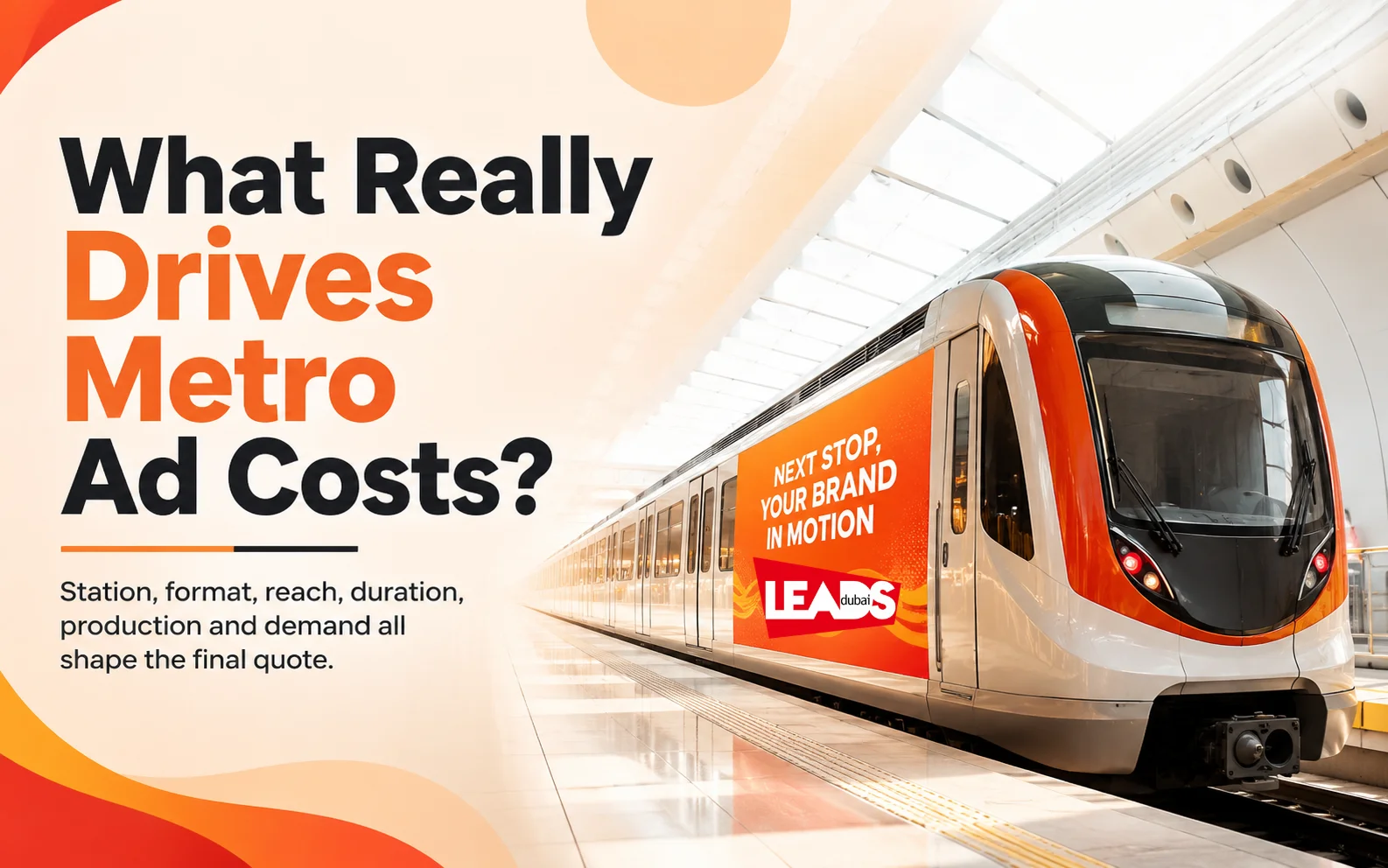
What determines metro advertising cost?
You will not find one useful metro rate online. The quote normally changes for six reasons:
- Station and passenger volume. Interchanges and stations near major destinations usually cost more.
- Format and size. A train wrap or station takeover costs more than one panel.
- Number of placements. Network coverage raises both reach and cost.
- Campaign duration. Media owners may set minimum booking periods.
- Production and installation. Wraps and specialist materials can be separate charges.
- Season and demand. Events and busy retail periods can affect inventory and price.
Ask for the full breakdown. It should show media, production, installation, taxes and any approval cost. This avoids a cheap-looking quote becoming expensive later.
How to choose stations and placements
Do not pick a station simply because its name is well known. Start with where your customers live, work, study, shop and change lines.
- Choose interchanges and central stations when broad reach matters.
- Choose sites near stores, offices, campuses or venues for local action.
- Use interior formats when the message needs time to read.
- Use large platform or entrance formats for fast recognition.
- Combine placements when passengers should see the message at several journey points.
For a UAE campaign, the inventory and approval process can change from one transport network to another. We can check the available sites and bring the options together. We do not own the network or claim to represent the transport authority.
Creative and approval
People may see the ad while walking or from the opposite platform. Give them one headline, a clear brand name and one next step. If you use a QR code, test it from the real viewing distance. Add a short URL as a backup.
The media owner or relevant authority will usually review the artwork. Confirm the site, size, language rules and deadline before paying for full production.
Booking process
- Define the audience, objective, geography and dates.
- Request current inventory and specifications.
- Compare options by reach, frequency, dwell time and total cost.
- Reserve inventory subject to the operator’s terms.
- Adapt and submit artwork for approval.
- Produce and install after written clearance.
- Collect installation photographs and reporting.
How to measure the campaign
Decide how you will measure the campaign before it starts. Track QR scans, visits to a campaign page, calls, offer codes, store visits and branded searches. Passenger numbers show the size of the network. They do not prove that every passenger saw your ad.
Metro advertising questions
Metro advertising places brand messages inside trains, in stations and along the passenger journey. Formats include train wraps, platform panels, digital screens, escalator branding and station takeovers.
There is no universal rate. Cost depends on the city, station traffic, format, number of sites, campaign length, production and approvals. Request current availability and an itemised media plan.
Train and station takeovers suit broad awareness. Platform screens build repeated exposure. Interior panels provide longer reading time. The right choice depends on audience, objective and budget.
Allow several weeks for inventory checks, artwork, authority review and installation. Train wraps and station takeovers normally need more preparation than standard panels or digital screens.
Yes. Use available passenger data, QR codes, campaign URLs, offer codes, branded-search changes, store visits and sales enquiries. Agree the measurement method before creative production.
Yes. The relevant transport authority, media owner or appointed operator normally reviews artwork for language, claims, imagery, public standards and restricted categories.
Need a metro advertising proposal? Share the target audience, market, dates and budget. We can compare current formats with other out-of-home advertising options where relevant.