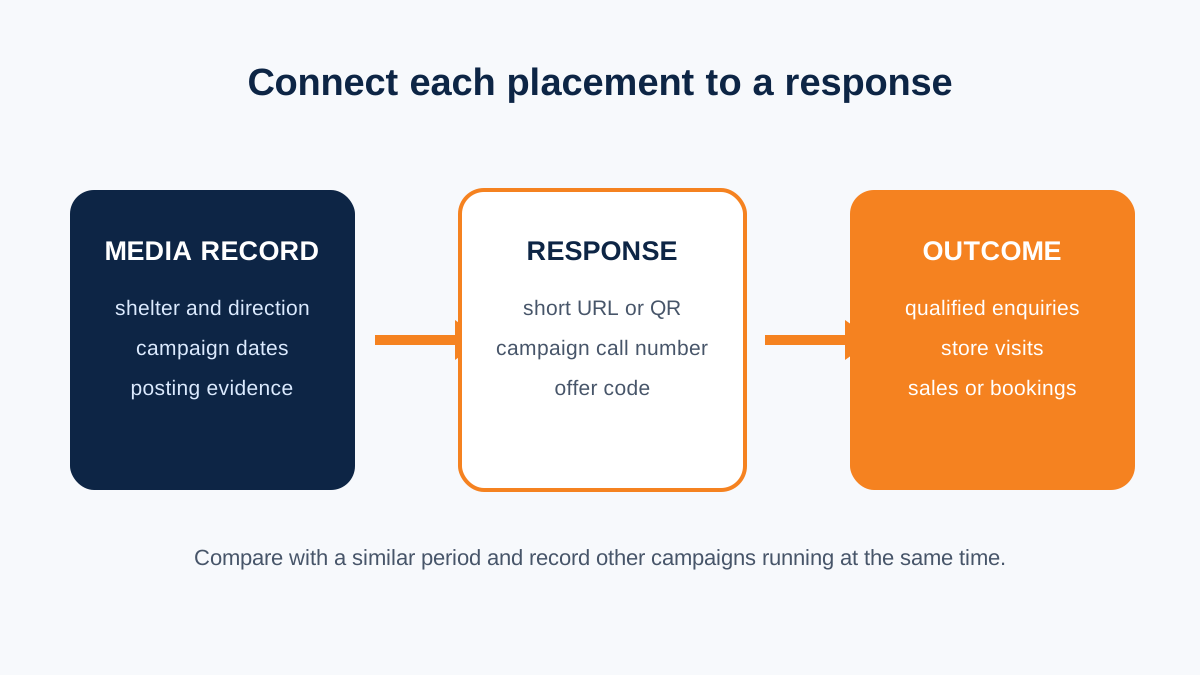
Short answer: measure bus shelter advertising by joining three records: where and when the advertisement ran, how people could respond, and what happened after the response. Estimated reach is useful for planning, but it should not be reported as proof of enquiries or sales.
Bus shelter media does not have a click report built into the placement. That does not make it unmeasurable. It means tracking has to be designed before the artwork is supplied.
Keep a record of every placement
List the shelter, road or area, viewing direction, posting dates and campaign duration. Keep photographs or posting evidence where available. If several creative versions run, record which version went to each location.
Give people one trackable action
The right action depends on how the shelter is seen. Pedestrians waiting nearby have more time than drivers passing at speed. Useful options include a short campaign URL, a QR code with a clear reason to scan, a dedicated call or WhatsApp route, an offer code, or a simple direction to a nearby branch.
Use one main action. Several small contact details make the advertisement harder to read and the response harder to attribute.
Establish a comparison period
Record normal enquiries, store visits or sales before the campaign. Compare the same days and hours where possible. Note holidays, promotions, weather, store closures and digital campaigns that could affect the result.
For a location-based business, compare the branch near the shelters with a similar branch outside the campaign area. For lead generation, tag responses from the campaign link or number in the CRM.
Measure outcomes in stages
Report the full path where possible:
- Trackable visits, scans, calls or code uses
- Qualified enquiries or store visits
- Sales, bookings or another agreed conversion
- Revenue or gross profit linked to those conversions
A scan is a response, not automatically a customer. Keeping the stages separate gives the next campaign a better planning baseline.
Calculate return carefully
Include media, production, installation and creative costs. Subtract total campaign cost from attributable gross profit, then divide by campaign cost. If attribution is uncertain, report a range and explain the assumptions.
Bus shelter advertising may also support awareness and later branded searches. That effect can be reviewed, but it should not be presented as direct sales unless there is evidence connecting it.
See our bus shelter advertising service for formats and planning. For broader location choices, compare outdoor advertising options in Dubai.
Bus shelter ROI questions
Can bus shelter advertising be measured?
Yes. Record the exact placements and dates, then use a campaign-specific URL, QR code, call number or offer. Compare qualified responses and sales with a suitable baseline.
Should every bus shelter advertisement use a QR code?
No. A QR code works only when people can safely stop and scan it. A short URL, memorable offer, nearby-store direction or call number may suit the viewing conditions better.
Is estimated audience reach the same as campaign results?
No. Reach estimates describe the possible audience. Results are measured through attributable actions such as visits, enquiries, redemptions, bookings or sales.