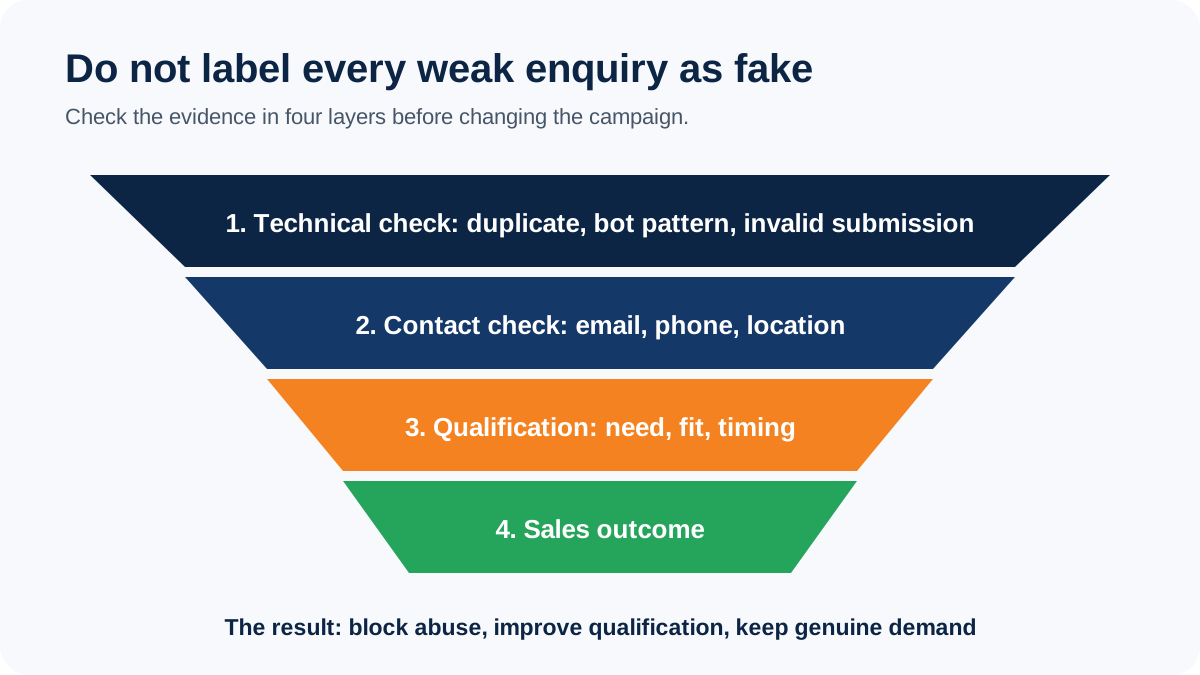
Short answer: a fake lead is not simply a person who failed to buy or answer the phone. Separate technical abuse, invalid contact details, duplicates and genuine but unsuitable enquiries. Then fix the correct part of the funnel. Blocking broadly can remove the very customers the campaign was built to find.
Businesses often call every disappointing enquiry fake. That hides different problems. A bot submission needs a technical control. A person outside the service area needs better targeting. A genuine prospect who receives six missed calls may need a better follow-up process.
Use clear lead-quality labels
Agree on a small set of outcomes before reviewing the campaign:
- Automated or abusive: repeated patterns, impossible form behaviour or known spam signals
- Invalid contact: phone or email cannot work after reasonable validation
- Duplicate: the same person and request already exists
- Wrong fit: real person, but outside the agreed service, area or criteria
- No response: contact appears valid but the person has not replied
- Qualified: meets the written criteria and can be contacted
Do not combine these into one “bad lead” field. Each label points to a different action.
Check the form and traffic first
Useful form protection happens in layers. Validate important fields on the server, add a hidden honeypot, limit repeated submissions and examine suspicious timing or traffic patterns. CAPTCHA can help, but it should not be the only control.
Keep enough source data to diagnose the problem, including landing page, campaign, timestamp and consent record. Do not collect extra personal data merely because it might be useful later.
Validate contact details without excluding real buyers
Check that an email address is structurally valid and that the phone number is plausible for its country. Be careful with rigid UAE-only assumptions. A property investor, tourist or international business buyer may enquire with an overseas number.
Repeated identical details can indicate duplicates, but shared company numbers and family email addresses also exist. Use the full submission context before rejecting the record.
Our AI form caller can contact and qualify suitable form enquiries while retaining the original campaign context.
Improve the question that qualifies the lead
Ask only what changes the sales route. For a service business, that may be location, required service, timeframe and budget range. For a course, it may be skill level and preferred schedule.
Avoid long forms full of mandatory fields. They can reduce real enquiries while determined spam still gets through. If one question repeatedly identifies poor-fit traffic, move it earlier or adjust the advert and landing page so expectations are clearer.
Build a sales feedback loop
The marketing team needs consistent outcomes from sales. “Lead was bad” is not enough. Record the contact attempts, reason for disqualification and whether the promised response time was met.
Review patterns weekly at first. A cluster from one campaign may show a targeting issue. Many invalid submissions in a few minutes may show automation. Valid leads with no timely contact point to an operational issue.
Use this evidence before asking an ad platform to optimise around conversions. If every form submission is reported as equal, the platform cannot distinguish a serious enquiry from an obvious duplicate.
For a campaign model with written qualification rules, see our pay-per-lead service. If old customer records need cleaning rather than fraud filtering, read about AI database reactivation.
Fake-lead questions
What is a fake lead?
It is a submission created without genuine buying intent, such as automated spam or deliberately false details. Poor fit and no response are separate outcomes.
How can a website form reduce spam?
Use server validation, a honeypot, rate limits and bot-risk checks. Keep the experience simple enough for genuine mobile users.
Should every suspicious number be blocked?
No. Check the format, repetition and wider context. International customers may have valid reasons for using a non-UAE number.
How should sales report lead quality?
Use consistent outcome labels and record contact attempts. This separates campaign problems from fraud and follow-up problems.