
What is your competitor strategy?
Short answer: competitor analysis means studying who you compete with, what they offer, how they price and where they advertise, so you can position and spend smarter. Tools like Google Auction Insights, SEO checks and social monitoring show where rivals are strong and where you can win.
Competitor analysis is useful when it changes a decision. The aim is not to copy another company. It is to understand what customers can already choose, where those offers are weak and what your business can credibly do better.
Before looking outside, record your own baseline:
- Do you know how much traffic is coming to your website from each marketing channel
- Which channels bring qualified leads, not just visits?
- Which landing pages, offers and devices produce enquiries or sales?
- Are calls, forms, purchases and CRM outcomes tracked correctly?
- Does each ad promise match the landing page?
- Have you set up proper landing pages and conversion tracking to measure success?
- Are you already following the best practices with many new google ads and Facebook ads updates?
- What can you change in the next 30 days?
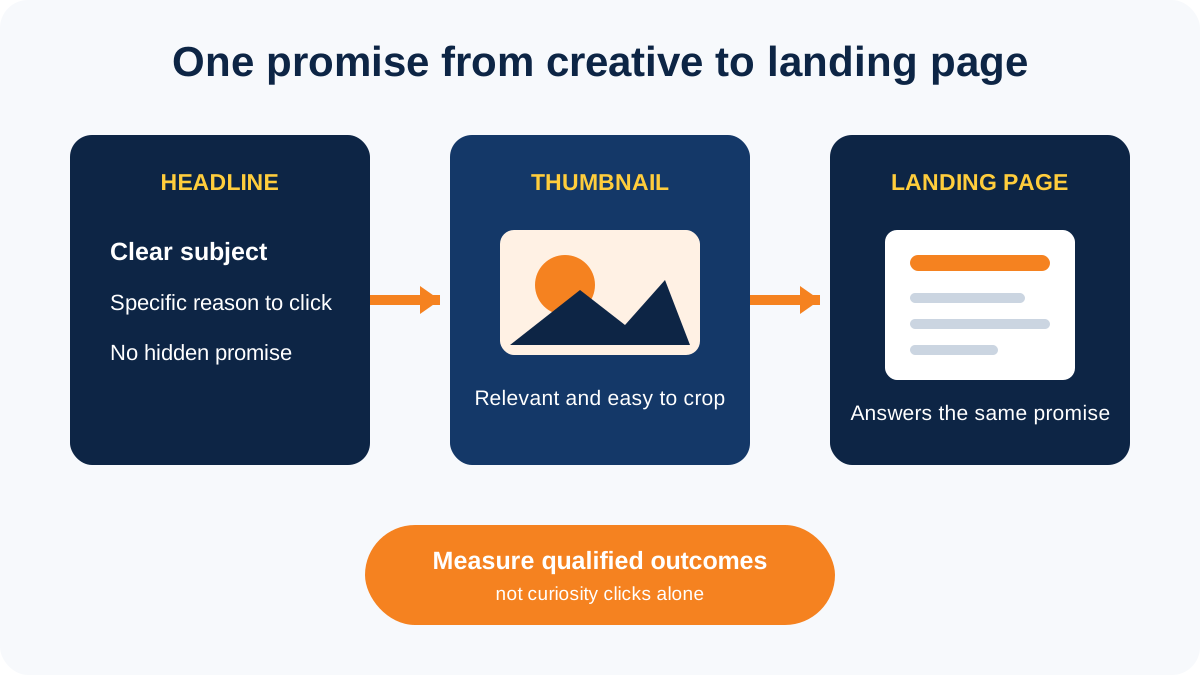
In digital marketing, the promise must continue from search result or ad to landing page. If an ad says free shipping or a 20% discount, the landing page should confirm it immediately. Otherwise the visitor has a reason to leave.
What to compare
| Area | Evidence to collect | Decision it should support |
|---|---|---|
| Offer | Price structure, guarantee, proof and response time | How your offer can be clearer or safer |
| Organic search | Ranking pages, search intent, useful formats and links | Which topics deserve a better page |
| Paid search | Auction Insights, public ads and landing pages | Where to defend, test or stop bidding |
| Social | Content themes, engagement quality and calls to action | Which formats fit your audience |
| Local search | Reviews, categories, service areas and profile completeness | Which local trust gaps to fix |
Use information that a customer can see or data from your own accounts. A third-party estimate of a rival’s traffic or budget is a clue, not a fact.
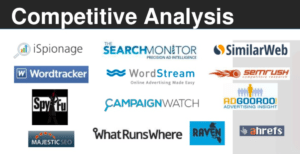
If you’re doing your competitor analysis, make sure you’re not using wrong information trends from them. There are many tools that can tell you the competitor’s best ads, keywords, landing pages, and what’s working for them. You can even see if someone is using your brand name in their ads or copyright issues. Some of the tools we found from hanapin marketing webinars are.
Google Analytics 4 does not use one attribution rule everywhere. User and session acquisition reports use last-click logic, while event-scoped reports can use the property’s selected model. Data-driven attribution assigns credit from observed account data. It is not position-based and it does not split credit equally. Use attribution reports as one view, then compare them with CRM revenue and lead quality.
Use Google Ads Auction Insights correctly
Auction Insights compares your visibility with advertisers entering the same eligible auctions. It is available for Search, Shopping and Performance Max campaigns that meet Google’s activity thresholds. Search reports include impression share, overlap rate, outranking share, position-above rate and top-of-page rates.
It does not show a competitor’s exact budget, keywords, conversions or return. Look for movement over time. A rising overlap rate may justify reviewing bids, ad relevance and landing pages, but it does not prove the other advertiser is profitable.
Turn the research into a 30-day plan
Choose three findings that can change performance now. That may mean rewriting one weak offer, building one missing comparison page and testing one paid-search message. Assign an owner, deadline and metric to each. Repeat the review quarterly, because competitors, search results and prices change.
Need an outside review? Leads Dubai can audit your SEO, paid media and landing pages, then show what deserves action. See our Google Ads services or call +971 50 304 7470.