
Affiliate marketing program for your business: a different way to market
Short answer: an affiliate marketing program pays approved partners for a defined sale or qualified lead. It can reduce media risk, but it still needs tracking, partner checks, clear commission rules, refund handling and reliable payouts. Start with the customer economics before recruiting affiliates.
Affiliate marketing has grown fast in recent years, driven by e-commerce and social media. For businesses that want to reach new customers and increase sales without paying upfront for ads, it has become one of the most practical channels available. Here is what an affiliate marketing program is, how it works, and why it pays off.
What is affiliate marketing?
Affiliate marketing is a performance-based model. You offer a commission to affiliates, individuals or companies with an online audience such as bloggers, influencers, and website owners, in exchange for promoting your product or service.
Each affiliate uses a unique link in their content. When someone clicks that link and makes a purchase, the affiliate earns a commission. You only pay when a real result comes through.
How does an affiliate marketing program work?
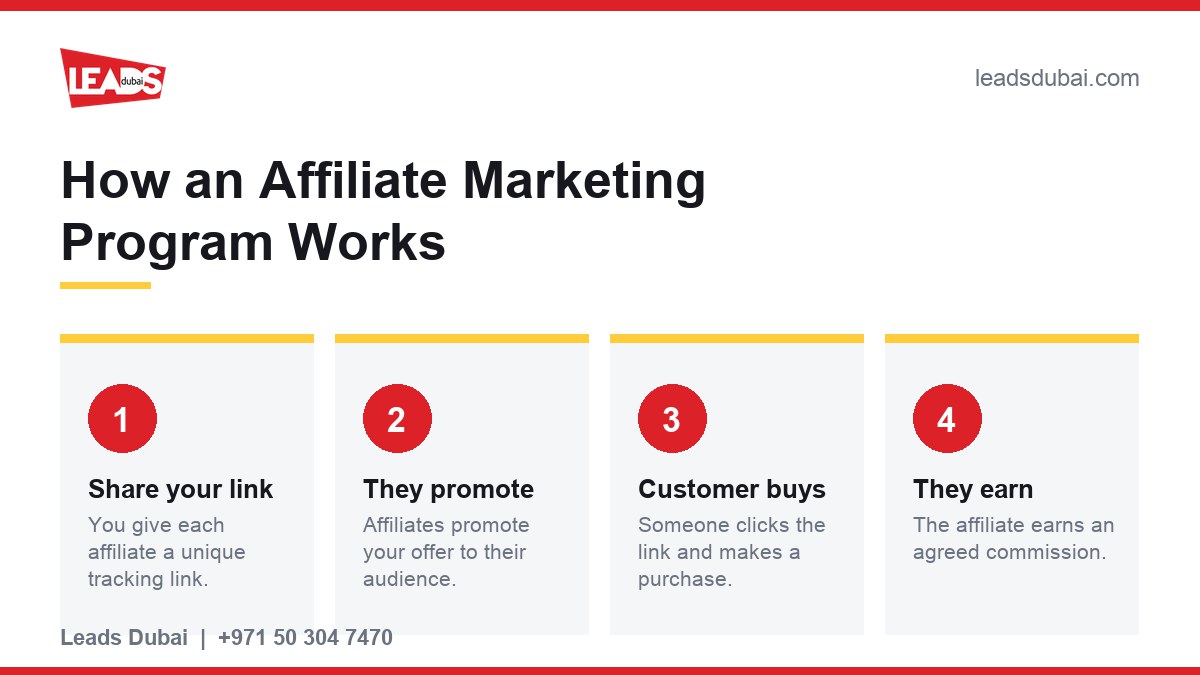
It runs on a simple partnership. You give affiliates a unique tracking link so every click and sale can be attributed to them. When a user clicks the link and buys, the affiliate earns a commission, either an agreed percentage or a flat rate. You set the terms, they bring the traffic, and the tracking does the rest.
Why affiliate marketing works: 4 reasons
1. It rides the growth of e-commerce
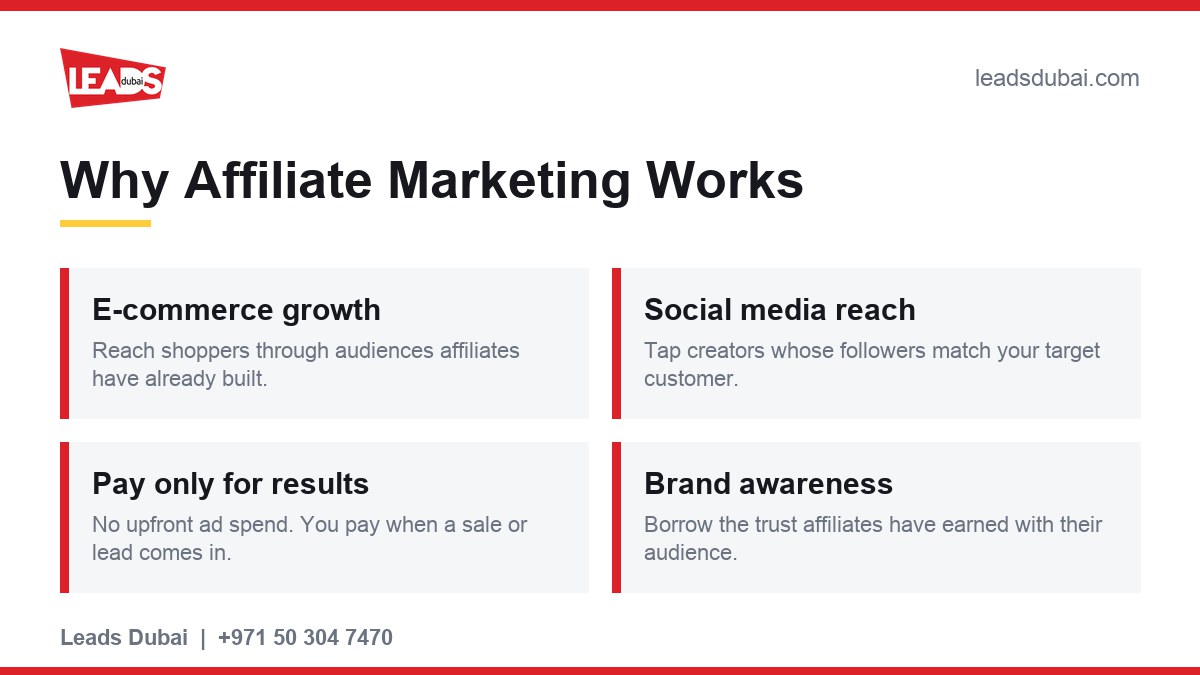
Online shopping keeps growing, and businesses need a strong online presence to compete. An affiliate program puts your product in front of audiences that affiliates have already built, so you expand your customer base and sales without building that reach from scratch.
2. It taps into social media reach
Social media is where a lot of buying decisions start. Through an affiliate program you can work with social media creators whose followers match your target customer. A recommendation from a creator their audience trusts converts better than most ads.
To go deeper on social channels, learn why your business needs social media marketing.
3. Commission follows an agreed result
The commission is triggered when affiliates generate an agreed result, such as a paid order or accepted lead. There may still be costs for the platform, setup, creative, management, discounts and fraud control. Build those into the calculation before setting the rate.
4. It builds brand awareness
When you partner with affiliates who have a large, engaged following, you reach a new audience and borrow some of the trust they have already earned. That widens your brand reach and builds customer loyalty, which feeds higher sales over time.
Two common reasons affiliate programs fail
- The offer is weak or the commission too low, so affiliates have no reason to promote it.
- The affiliate is the wrong fit and cannot promote it profitably.
Set the program economics first
| Decision | What to define |
|---|---|
| Payable action | Paid order, completed booking or accepted lead |
| Commission | Flat amount or percentage that the margin can support |
| Attribution window | How long after a tracked click the partner can earn credit |
| Validation | Duplicate, fake, cancelled and refunded actions that do not qualify |
| Payout | Approval period, payment date, currency and minimum balance |
| Promotion rules | Brand bidding, coupon use, email, paid social and disclosure requirements |
For lead generation, write down what a qualified lead means. A form submission alone may not be enough. The service area, contact details, requested service and intent may all matter.
Tracking and partner quality
Use unique links and server or platform records where possible. Compare affiliate reports with orders, CRM outcomes, cancellations and refunds. Review unusual conversion rates, repeated details and sudden traffic spikes before paying commissions.
Approve partners individually at the start. Check where they plan to promote the offer and how they describe it. Affiliates should make the commercial relationship clear to their audience and must not publish claims the business cannot support.
Recruit affiliates who can actually sell the offer
Start with partners who already reach the people most likely to buy. That may include specialist publishers, comparison sites, creators, email-list owners or businesses with a complementary audience. Audience fit matters more than follower count.
Ask each prospective affiliate where the offer will appear, which countries they reach, what traffic methods they use and how they will describe the product. Give approved partners accurate copy, useful creative and a clear landing page. Review the first conversions closely before increasing volume.
Affiliates may use editorial content, email, paid search, social advertising, native advertising or their own apps. Write down which methods are allowed. Rules should cover brand-keyword bidding, misleading discounts, incentive traffic, unapproved claims, duplicate leads, refunds and chargebacks. A partner who hides the traffic source is not a good fit.
Affiliate partners can help a business reach new customers, but the offer, tracking and terms decide whether the channel is profitable. We can also help promote your own event in the UAE.
Have a strong offer to promote? Contact Leads Dubai at +971 50 304 7470 to talk through your affiliate marketing options.