 Training guide
Understanding Conversion Rate Optimization
What conversion rate optimization involves, how to find where visitors drop out, what to test first, and how long to run a test before the result means anything.
In short: conversion rate optimisation is finding where visitors give up and removing that reason. Start by watching where they drop out rather than guessing, fix the biggest leak first, change one thing at a time, and run the test long enough to be sure. Most gains come from clearer copy, fewer form fields and faster pages, not from button colours.
Conversion rate optimization, usually shortened to CRO, is the work of helping more of the right visitors complete a useful action. That action might be a qualified enquiry, booked consultation, purchase or account registration. Good CRO begins by checking the measurement and learning why people hesitate. It does not begin with changing a button colour.
How to calculate conversion rate
Conversion rate = completed conversions ÷ eligible visits × 100. If 25 of 1,000 landing-page sessions produce a valid enquiry, the session conversion rate is 2.5%. Use the same denominator when comparing periods. A rate based on users cannot be compared directly with one based on sessions.
Define the outcome before opening a report. A button click is useful diagnostic data, but it is not a qualified lead. In GA4, an event that measures an important business action can be marked as a key event. Track the steps leading to the result, then connect the final enquiry or sale to the CRM so the team can distinguish volume from quality. Google explains GA4 key events here.
Start with the leak, not the test
First test the journey yourself on a real phone and desktop. Submit the form, call the number, use WhatsApp and confirm that each action reaches the correct person. Then compare analytics with form records, call logs and CRM outcomes. If the tracking is broken, the apparent conversion problem may be a measurement problem.
- Quantitative evidence: find the page, device, source or step where the largest useful audience drops out.
- Behaviour evidence: use recordings, heatmaps and form analytics to see what people encounter before leaving.
- Direct feedback: read sales objections, rejected-lead reasons, support questions and short on-page survey responses.
- Manual review: check message match, mobile layout, page speed, accessibility, errors and trust information.
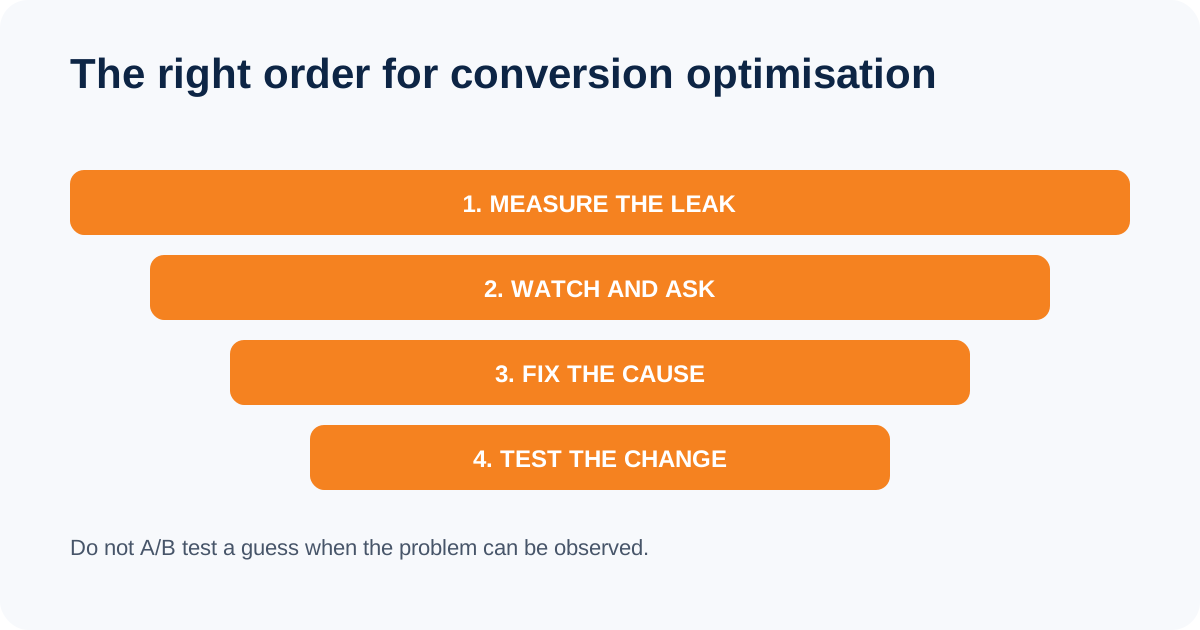
Fix obvious problems before running an experiment
A broken form, unreadable mobile layout, wrong phone number or missing service explanation does not need an A/B test. Fix defects first and verify the repair. Experiments are for choices where the better answer is uncertain, such as two credible offers or two different ways to explain the same service.
The highest-value fixes are often basic: continue the promise made in the ad or search result, state who the service is for, answer the main price or process concern, show credible proof, remove unnecessary fields and make the next step clear. For a deeper review of the full journey, see our conversion rate optimization service in Dubai.
Write a testable hypothesis
A useful hypothesis names the evidence, the proposed change and the outcome. For example: “Mobile visitors abandon the form at the company-size field. Making that field optional should increase completed qualified enquiries without reducing acceptance by sales.” This is stronger than “test a shorter form” because it explains why the change may work and how success will be judged.
- Test one meaningful idea at a time when you need to know what caused the result.
- Choose the primary outcome and guardrail metrics before the test starts.
- Keep campaign, tracking and page changes stable during the comparison where possible.
- Record the hypothesis, dates, audience, variants, result and decision.
How long should an A/B test run?
There is no honest universal duration. It depends on traffic, baseline conversion rate, the size of change worth detecting and the normal time between a visit and the final outcome. Cover complete business cycles and let the test reach the sample requirement set before launch. Do not stop because one version moves ahead after a few days.
Google recommends setting a clear hypothesis, testing one variable at a time and choosing the success metrics before an experiment begins. Its Search guidance also says alternate test URLs should point to the original with a canonical, and temporary test redirects should use 302 rather than 301. Read Google’s experiment guidance and its SEO guidance for website tests.
Judge the result beyond conversion rate
A page can produce more enquiries and less business. Check lead acceptance, booked appointments, sales, revenue and cancellations where the sales cycle allows it. Also watch guardrails such as form errors, page speed, average order value and refund rate. If the experiment increases shallow actions but damages qualified outcomes, it did not win.
A practical CRO workflow
- Define the business outcome and verify its tracking.
- Find the highest-impact leak using analytics and CRM evidence.
- Research why people stop through behaviour data and direct feedback.
- Repair confirmed defects without waiting for an experiment.
- Prioritise uncertain improvements by likely impact, evidence and effort.
- Write one hypothesis and decide the success measure in advance.
- Run the test for its planned sample and complete business cycles.
- Check quality and revenue, document the decision, then choose the next problem.
CRO works best alongside sound measurement. The digital marketing audit guide explains how to verify the wider channel and lead journey, while our Google Analytics training covers the reporting skills behind the analysis.
FAQs
What is a good conversion rate?
There is no universal good conversion rate. It changes with the offer, audience, traffic source, device and what counts as a conversion. Compare like with like, then check whether qualified outcomes and revenue improved rather than chasing a borrowed benchmark.
How long should I run an A/B test?
Run it until it reaches the sample requirement chosen before launch and covers the relevant weekly and buying cycles. The required time depends on traffic, conversion volume and the effect you need to detect. Do not use one week as a universal rule or stop when a version briefly moves ahead.
What should I test first on a landing page?
Test the strongest evidence-backed uncertainty at the largest leak. That could be the offer, headline, price explanation, proof, form or next step. Fix broken tracking, forms and mobile layouts directly before testing optional improvements.
How do I find out why visitors are not converting?
Combine analytics and funnel data with recordings, heatmaps, form errors, survey responses, sales objections and rejected-lead reasons. One source shows where people stop; another may explain why. Treat recordings carefully because they show behaviour, not a visitor’s private motivation.