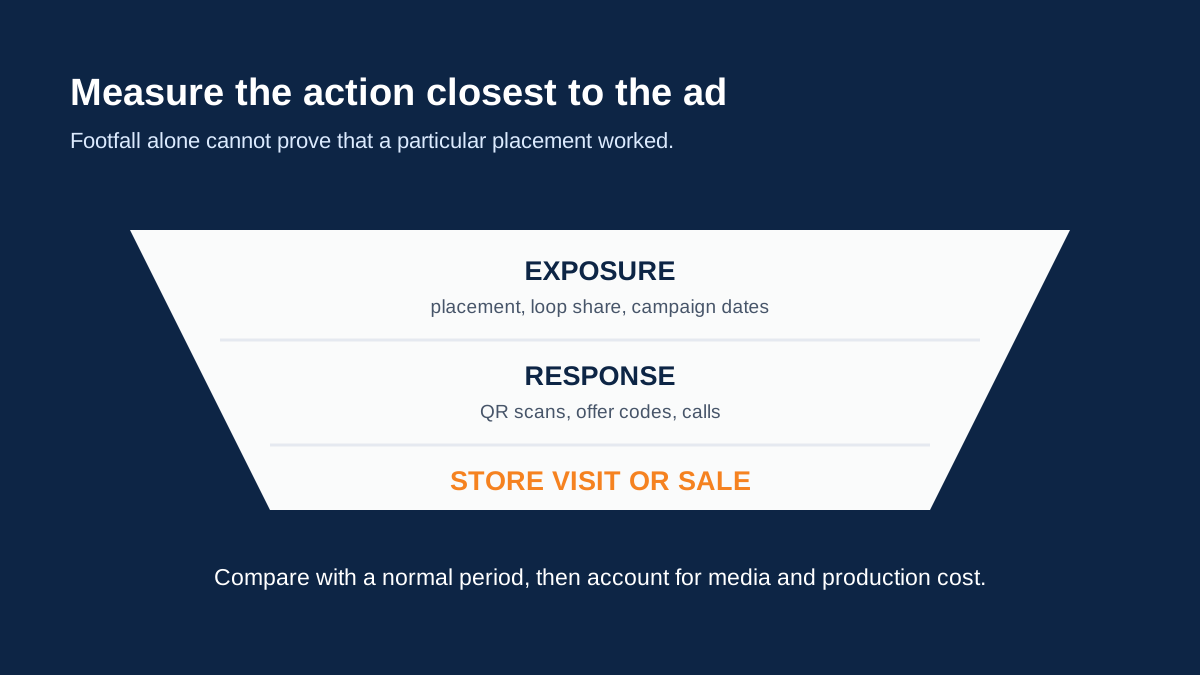
Short answer: mall advertising ROI is measured by connecting a specific placement and campaign period to a response, visit or sale. Mall footfall is useful context, but it does not prove that people saw your screen. Build tracking into the offer before the artwork is approved.
Mall media can support awareness, store visits, launches and enquiries. Each objective needs a different measurement plan. Trying to judge every campaign by immediate sales can be misleading, but reporting only mall footfall is not enough either.
Start with one business outcome
Choose the result before choosing the placement:
- Store visits: compare visits during the campaign with a normal period.
- Offer redemptions: use a code available only on the mall creative.
- Enquiries: use a dedicated QR page, form, WhatsApp link or number.
- Awareness: use a short recall survey or compare branded search interest.
- Product trial: record samples issued and attributable purchases or sign-ups.
The outcome should match what a shopper can reasonably do after seeing the ad.
Record the media delivery properly
Ask for the exact mall, location, screen or structure, campaign dates and operating details. For digital screens, confirm the loop length and how often the creative appears. For a static placement, confirm dimensions, sightline and installation period.
These details help explain performance. An entrance screen, food-court lightbox and parking-area display do not have the same audience or viewing conditions.
Use a baseline, not a guess
Compare the campaign period with a similar period before the campaign. Account for weekends, public holidays, promotions, store changes and seasonal demand. If several marketing campaigns run together, mark their dates so the mall placement is not given credit for every result.
For retailers, useful comparisons include:
- store entries by day and hour
- transactions and average order value
- offer redemptions
- directions or map actions
- campaign landing-page visits
- new versus returning buyers
Calculate commercial return
A simple calculation is:
attributed gross profit minus total campaign cost, divided by total campaign cost
Total cost may include media, production, installation, activation staff, permits and creative adaptation. Revenue alone can overstate return when product margins vary.
If direct attribution is limited, report a range and explain the method. A careful estimate is more useful than a precise-looking number built on assumptions.
Make the creative measurable
The tracking device should not overwhelm the message. Use one short action that fits the viewing distance. A large QR code may work where shoppers can stop. A simple store-floor direction or memorable offer code may work better where they are moving.
See the available mall advertising formats in Dubai. If the campaign involves staffed experiences or product trials, review our mall activation service and the planning guide for food sampling approvals.
Mall advertising measurement questions
How do you calculate ROI for mall advertising?
Subtract the total campaign cost from the gross profit attributed to the campaign, then divide by campaign cost. Use a dedicated code, QR page, booking link or store comparison to estimate attributed results.
Is mall footfall enough to measure an advertising campaign?
No. Footfall describes the audience available in the mall, not the number who noticed or acted on one placement. Pair footfall information with a measurable response or store outcome.
What should be tracked for a mall screen campaign?
Confirm the exact screen, operating hours, loop length, your share of the loop and campaign dates. Add a trackable action such as a short URL, QR code or nearby-store offer.