
Understanding your cost per lead is fundamental to running profitable marketing campaigns. Whether you are running Google Ads, social media campaigns, or SEO, knowing exactly how much each potential customer costs allows you to allocate your budget wisely and maximize return on investment.
What is cost per lead (CPL)?
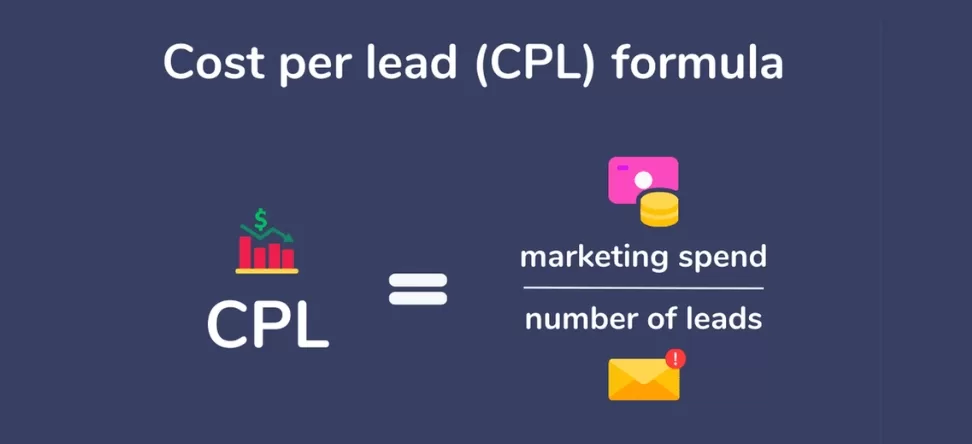
Short answer: cost per lead (CPL) is your total marketing spend divided by the number of leads it generated. For example, AED 5,000 spent for 50 leads is a CPL of AED 100. Track it per channel to see which brings leads cheapest, and compare it to the value of a customer to judge whether it is profitable.
Cost Per Lead (CPL) is the amount a business spends to acquire one potential customer through marketing activities such as Google Ads, social media ads, SEO, or display advertising. It is one of the most important metrics for measuring marketing efficiency.
The formula is straightforward:
> Cost Per Lead (CPL) = Total Marketing Spend ÷ Total Leads Generated
For example, if you spend AED 5,000 on a campaign and generate 100 leads, your cost per lead is AED 50. Include every direct cost for the period: ad spend, platform fees, agency fees and the labour that ran the campaign.
Practical Dubai business example
Let us walk through a real calculation. Suppose your Dubai-based business received 50 leads in a month through your Google Ads campaign. Of those 50 leads, you were able to convert 5 into paying customers. Your conversion ratio is 50 ÷ 5 = 10%.
If the total profit generated from those 5 conversions was AED 10,000, then your profit per conversion is AED 2,000. Your profit per lead (including unconverted leads) is AED 10,000 ÷ 50 = AED 200 per lead.
This AED 200 figure is your revenue per lead, and it is a more meaningful metric than basic CPL because it tells you the actual value each lead brings to your business, not just what they cost to acquire.
Why revenue per lead matters more than CPL
While CPL tells you the cost side of the equation, revenue per lead reveals the value side. A lead that costs AED 50 but never converts is more expensive than a lead that costs AED 200 and becomes a loyal customer. Focus on the quality of leads, not just the quantity.
Four reasons CPL alone can be misleading: surface-level simplicity hides deeper issues; extended sales cycles of 6+ months complicate attribution; reporting integrity declines as deals mature; and multiple concurrent campaigns make accurate attribution difficult.
Average cost per lead by industry in Dubai
Cost per lead varies a lot by industry. Typical ranges in the Dubai market:
| Industry | Typical CPL (AED) | Notes |
|---|---|---|
| Real estate | 100 to 500+ | High property values and intense competition |
| B2B services | 50 to 300 | Longer sales cycles, higher-value deals |
| Healthcare and education | Moderate | Fewer but high-intent leads |
| E-commerce | 10 to 80 | Lower CPL, needs higher volume to profit |
What counts as a good CPL is not the number on its own, but how it compares with your revenue per lead and customer lifetime value. A higher CPL is fine if those leads become high-value customers.
How to optimize your cost per lead
To lower your CPL while maintaining lead quality, focus on these strategies: integrate your CRM with your advertising platforms to track leads through the entire sales cycle; target high-intent keywords that attract qualified buyers rather than browsers; align your sales and marketing teams so both departments work toward the same revenue goals; and localize your landing pages for UAE audiences with Arabic language options and local phone numbers.
Marketing departments that demonstrate comprehensive performance visibility, tracking lead maturation through sales cycles while maintaining communication with sales teams, gain a strategic advantage in understanding true marketing ROI.
 Need help optimizing your cost per lead in Dubai? Contact Leads Dubai for a
free marketing audit. Call +971503047470 or
email Leads@leadsdubai.com.
Need help optimizing your cost per lead in Dubai? Contact Leads Dubai for a
free marketing audit. Call +971503047470 or
email Leads@leadsdubai.com.
FAQs
The cost per lead (CPL) formula is: Total Marketing Spend divided by Total Leads Generated. For example, if you spent AED 5,000 on a Google Ads campaign and generated 100 leads, your CPL is AED 50. When calculating, include all direct campaign expenses such as ad spend, platform subscriptions, agency fees, and labor costs for the same time period. For a more complete picture, also calculate revenue per lead (Total Revenue divided by Total Leads) to understand the actual value each lead brings.
A good cost per lead in Dubai varies significantly by industry. Real estate CPL typically ranges from AED 100 to AED 500+ due to high property values and competition. B2B services range from AED 50 to AED 300 depending on the service complexity. E-commerce CPL is generally lower at AED 10 to AED 80. The key is not the absolute CPL number but how it compares to your revenue per lead and customer lifetime value. A high CPL is acceptable if those leads convert into high-value customers.
Focus on four strategies: first, refine your targeting to reach high-intent audiences who are closer to a purchase decision. Second, improve your landing pages with clear value propositions, local phone numbers, and fast load times. Third, use negative keywords in paid campaigns to filter out irrelevant traffic. Fourth, implement lead scoring to focus your sales effort on the most qualified prospects. Testing ad creatives and adjusting bids based on conversion data rather than click data will also reduce wasted spend.
Cost per lead (CPL) measures the cost to generate a potential customer who has shown interest, such as filling out a form or requesting a quote. Cost per acquisition (CPA) measures the cost to convert that lead into a paying customer. CPA is always higher than CPL because not all leads convert. For example, if your CPL is AED 50 and your lead-to-customer conversion rate is 10%, your CPA is AED 500. Both metrics are important for understanding your marketing funnel efficiency.
Yes, tracking CPL by channel is essential for optimizing your marketing budget. Break down your CPL for each channel separately: Google Ads, Facebook Ads, SEO, email marketing, and any other sources. This reveals which channels deliver the most cost-effective leads and which are underperforming. However, also consider lead quality by channel, a channel with higher CPL but better conversion rates may actually deliver better ROI than a cheap channel with poor-quality leads.