 Training guide
How to Build a Social Media Strategy That Produces Results
A six-step social media strategy: set the goal, know the audience, pick the platforms, plan the content, engage properly, then measure what matters.
A social media strategy in one paragraph
In short: a social media strategy decides who the business needs to reach, what useful role its content will play, which platforms deserve attention, how the work will be produced and which business result will decide whether it continues. A posting calendar is part of the plan, not the strategy itself.
A social media strategy decides who the business needs to reach, what useful role its content will play, which platforms deserve attention, how the work will be produced, and which business result will decide whether it continues. A posting calendar is part of the plan, not the strategy itself.
1. Choose one business outcome
Start with a result the team can recognise: qualified enquiries, booked appointments, product sales, event registrations, useful customer conversations or retention. Awareness can be a valid goal, but define what improved awareness should make easier afterwards.
2. Define the audience from real evidence
Use sales calls, enquiries, reviews, CRM notes and search terms to understand the questions people ask before buying. Write for that person and situation. Broad labels such as “business owners in Dubai” rarely produce a useful content decision.
3. Give each platform a job
Choose platforms from audience behaviour and the format your team can produce well. A visual consumer brand may use Instagram for demonstrations. A B2B company may use LinkedIn for practical expertise. TikTok or short video can support discovery. WhatsApp can handle a conversation after interest exists. These are starting hypotheses, not rules for every UAE business.
4. Build repeatable content themes
- Questions: answer what customers repeatedly ask before buying.
- Proof: show the work, process, examples and authorised customer evidence.
- Judgement: explain what the company recommends, avoids and has learned.
- Offer: state what is available, who it suits and what the next step involves.
One useful idea can become a short video, carousel, detailed post and sales answer, but adapt the opening and format to the platform rather than pasting the same asset everywhere.
5. Plan production and response
Assign the person who supplies expertise, the person who creates the post, the approver and the person answering comments or messages. Decide which claims require checking and which customer details cannot be published. A sustainable schedule beats a burst of daily filler followed by silence.
6. Measure the path to a customer
- Distribution: qualified reach and the share of the intended audience reached.
- Usefulness: watch time, saves, sends, meaningful replies and profile actions where the platform supplies them.
- Business result: tracked enquiries, qualified chats, bookings, sales and assisted conversions.
Use tagged links and CRM source fields where practical, but expect some conversations to cross devices and private channels. Review the full path and avoid claiming exact attribution when the evidence is incomplete.
Turn it into a 90-day plan
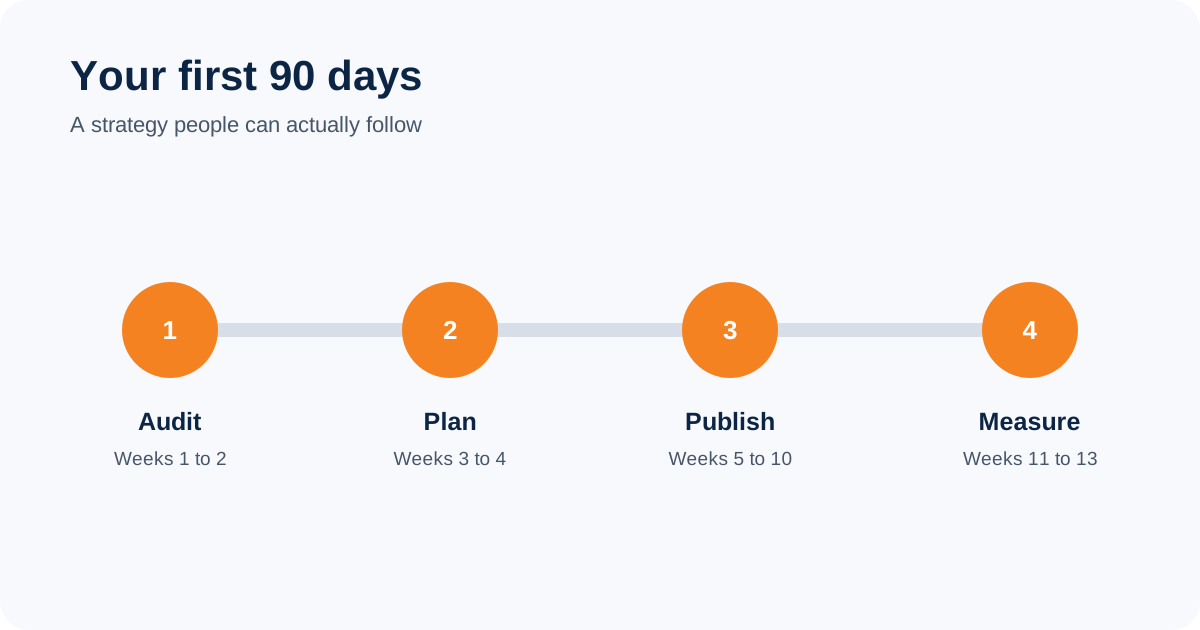
- Weeks 1 and 2: audit the accounts, choose the outcome, define the audience and record the starting numbers.
- Weeks 3 and 4: choose content themes, assign responsibilities and produce the first small batch.
- Weeks 5 to 8: publish consistently, answer people and note which questions and formats create useful action.
- Weeks 9 to 12: repeat what worked, stop what did not, and use paid distribution only where it supports a clear goal.
Handle public complaints properly
Acknowledge the issue without arguing, move personal details into a private channel and give the conversation a named owner. When appropriate, return to the public thread with the resolution. Do not delete criticism merely because it is uncomfortable, but moderate threats, private information and content that breaches the platform rules.
To practise this framework on your own accounts, see our social media marketing training in Dubai and live online.
FAQs
How often should a business post?
Post as often as the team can produce useful work and respond properly. Start with a manageable schedule, compare results over several weeks and increase only when quality remains steady. There is no posting frequency that suits every platform and business.
Which social media platform should a UAE business use?
Use the platform where the intended customer already pays attention and where the business can produce a suitable format consistently. Verify that choice using account insights, enquiries and sales rather than a general platform-popularity statistic.
Should social media be organic or paid?
Organic content builds a body of useful work and allows the team to learn. Paid social buys distribution and can test an offer faster. They work well together, but paid reach cannot repair an unclear offer or weak creative.
How do I know if the strategy is working?
Compare the chosen business outcome with the starting period and the cost of producing and promoting the work. Use reach and engagement to diagnose what happened, then use qualified enquiries, sales or the intended customer action to judge success.