 Training guide
How to Write SEO-Friendly Content
Write SEO-friendly content that answers the query clearly, uses reliable sources, adds first-hand value and gives readers a useful next step.
SEO-friendly writing begins with the reader’s task
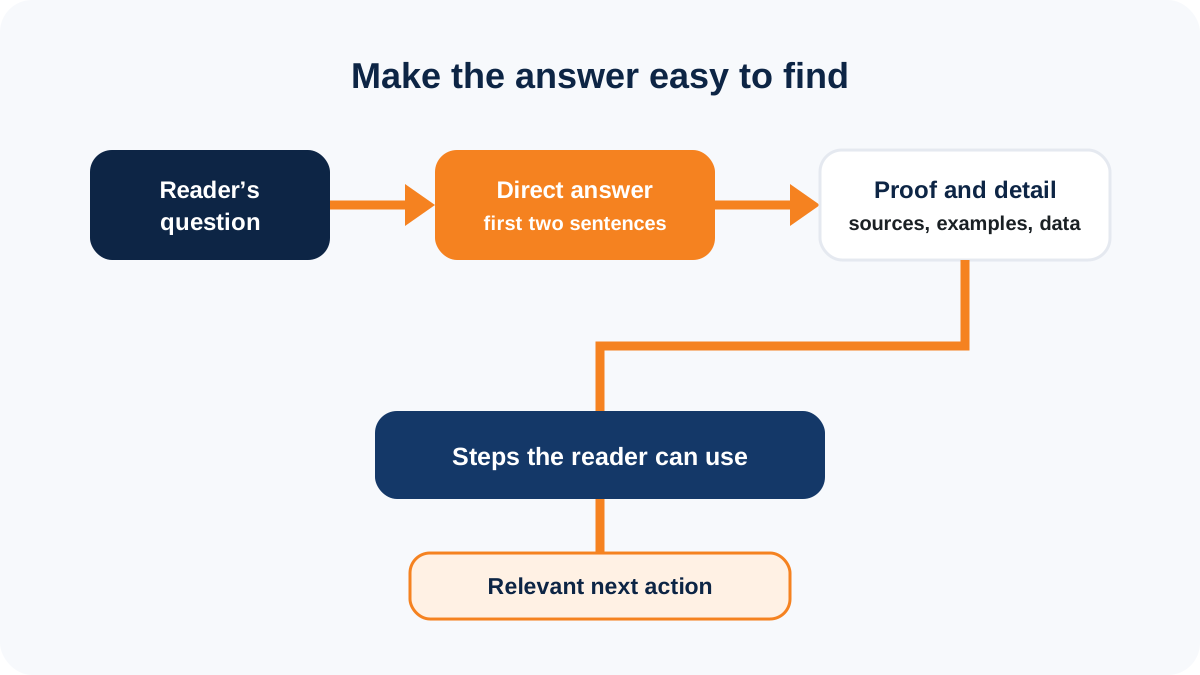
In short: SEO-friendly content answers the question the search asked, in the words people use, structured so both a reader and a machine can find the answer fast. Put the answer in the first two sentences of a section, use the question as the heading, and give it something first-hand that cannot be copied from the results page.
SEO-friendly content answers the query clearly, earns trust and helps the reader take the next sensible step. It is not ordinary copy with a keyword repeated through it. Before drafting, define the audience, what they are trying to decide, what they already know and what evidence the answer requires.
1. Give the answer before the background
Use the main heading to name the topic accurately. Open each important section with a direct answer, then explain the detail, exceptions and evidence. This helps a person scan the page and gives search systems a clear passage to understand or quote.
2. Build the outline from real questions
Use customer conversations, Search Console queries and result-page gaps. Group questions that belong to the same decision. Remove sections included only because competing pages have them. The page should feel complete for its reader, not long for its own sake. Google states there is no preferred word count in its people-first content guidance.
3. Add information another writer cannot copy easily
- A worked example using the business’s real process.
- A named expert’s judgement and the limits of that judgement.
- Original data with collection method and date.
- A screenshot, diagram or photograph that proves or explains the point.
- A local detail, price, constraint or decision customers regularly face.
If the evidence is unavailable, mark it as unknown or remove the claim. Do not invent a customer quote, result, credential or statistic to make a page feel authoritative.
4. Use keywords as labels, not decorations
Place the language people use in the title, H1, useful subheadings, link text and image descriptions where it fits naturally. Use synonyms when they improve clarity. Repetition does not make a weak answer relevant, and keyword stuffing makes the page harder to trust.
5. Link claims and next steps properly
Link material factual claims to primary sources where possible. Use internal links when another page gives the next level of detail or offers the relevant service. Anchor text should tell the reader what opens. A page does not need to repeat everything the site has already explained.
6. Edit for humans after the SEO pass
Read the copy aloud. Remove filler introductions, repeated conclusions, unsupported superlatives and sentences that sound impressive but say nothing. Check names, numbers, dates, links and image descriptions. Let a subject expert approve material claims and a named human owner make the publication decision.
7. Refresh when the answer changes
Update a page when its facts, product, regulations, search intent or performance change. Do not change the date merely to appear fresh. Record what changed and review pages tied to volatile platforms more frequently than stable explanations.
This editorial process is covered in our content marketing training and SEO training. Both are paid, practical courses available in Dubai or live online. Current training runs within one week with 10 taught hours, and fees start from AED 3,000 per person.
FAQs
Does SEO content need an exact word count?
No. Write enough to complete the reader’s task with appropriate evidence. A simple definition may need a short answer, while a technical comparison may require much more detail.
Can AI write SEO-friendly content?
AI can help research, organise and draft, but a human must verify claims, add genuine experience, remove generic wording and approve publication. Publishing many pages without original value creates quality and spam risk.
Where should the primary keyword appear?
Use it naturally in the title, H1 and opening answer when that is the clearest wording. Include it in relevant headings, links or alt text only when those elements genuinely describe the same topic.