 Training guide
Digital Marketing Interview Questions and Answers
The questions digital marketing interviews actually ask, what they are testing for, and the one campaign story that answers most of them at once.
In short: most digital marketing interviews test three things: whether you understand the channel, whether you can read data and change a decision because of it, and whether you have actually run something. Prepare one campaign you can describe end to end, with the numbers, what you changed and what happened. That single story answers more questions than any list.
Digital marketing interview questions usually test three things: whether you understand the channel, whether you can read evidence and make a decision, and whether you can explain work you genuinely did. Prepare one campaign story with the goal, your role, the numbers, the change you made and the result. That story is more useful than memorising fifteen definitions.
Prepare one campaign story first
Choose a real piece of work. It can be a job, internship, course project, your own website or work for a small business. Do not present group results as your personal achievement. Be precise about what you controlled and what somebody else decided.
- Goal: what business outcome was the campaign expected to produce?
- Starting point: what did the data show before you acted?
- Your action: what did you personally change, and why?
- Result: what happened to the agreed metric?
- Lesson: what would you keep, stop or test next?
Digital marketing interview questions and strong answer points
1. What is digital marketing?
A clear answer is enough: digital marketing uses online channels such as search, websites, email, social platforms and advertising to reach an audience and produce a measurable business action. Then explain the part you know best. Listing every channel without connecting it to a customer or outcome sounds rehearsed.
2. How would you plan a campaign?
Start with the customer and business goal, then define the conversion, message, channel, audience, budget, landing experience and measurement. State what evidence would make you continue, change or stop. A campaign plan is incomplete if nobody agrees what success means.
3. Which metrics would you report?
Match the metric to the goal. Awareness may use qualified reach or video completion. Lead generation needs valid enquiries, cost per qualified lead and later sales outcomes. Ecommerce needs purchases, revenue, margin and return after refunds. Clicks and engagement help diagnose performance, but they are rarely the final business result.
4. What would you check if traffic increased but leads fell?
First verify tracking and form delivery. Then segment by source, campaign, landing page, device, location and new versus returning users. Check whether the extra traffic had the right intent, whether the page continued the promise made before the click, and whether a technical or offer change happened at the same time.
5. What is a conversion in GA4?
Use current terminology. GA4 records interactions as events. An event that measures an action important to the business can be marked as a key event. A Google Ads conversion can then be created from an Analytics key event when appropriate. Google’s key-event guide explains the relationship.
6. How do SEO and paid search differ?
SEO earns visibility in organic search by making useful pages accessible, understandable and credible. Paid search enters an ad auction and charges according to the campaign model, commonly per click. Both depend on matching search intent and sending the visitor to a relevant page, but their controls, timescales and reporting are different.
7. What is Quality Score in Google Ads?
Quality Score is a 1 to 10 diagnostic for comparing the expected quality of a keyword’s ads and landing pages with other advertisers. It is not itself an auction input. Google says to use it to diagnose expected click-through rate, ad relevance and landing-page experience rather than treating the score as the campaign goal. See Google’s explanation of ad quality.
8. How would you improve a weak paid-search campaign?
Check conversion accuracy and lead quality before changing bids. Review search terms, locations, devices, budgets, ads and landing pages against the intended customer. Explain which problem the evidence points to. An interviewer is looking for diagnosis, not a list of every available setting.
9. How would you investigate an organic traffic drop?
Confirm the date and affected pages in Search Console and analytics. Check tracking, indexing, canonicals, redirects, server errors, manual actions and recent releases. Compare lost queries and page types before blaming an algorithm update. State what you know, what you suspect and what evidence would separate the causes.
10. How do you measure social media work?
Separate organic publishing from paid campaigns. Use reach, saves, replies and video retention to understand content, then connect visits, enquiries and sales where the customer journey supports it. Follower count alone does not show that the right people noticed or acted.
11. Where should AI be used in marketing?
Give a bounded answer. AI can help classify search terms, summarise research, generate variants and find patterns, but a person still owns the brief, source checking, brand judgment and final decision. Mention a real task where it saved time, and explain how you checked the output.
12. How do you prioritise marketing work?
Fix lost leads, broken measurement and wasted spend with clear evidence first. Then rank opportunities by expected business impact, confidence in the evidence and effort. Keep confirmed defects separate from experiments, because a broken form does not need a hypothesis test.
13. Tell me about a campaign that failed
Choose a real example and do not disguise it as a success. Explain the assumption, the evidence that proved it wrong, what you changed and what you learned. Taking responsibility for a controlled mistake is stronger than claiming every campaign worked.
14. How do you keep your platform knowledge current?
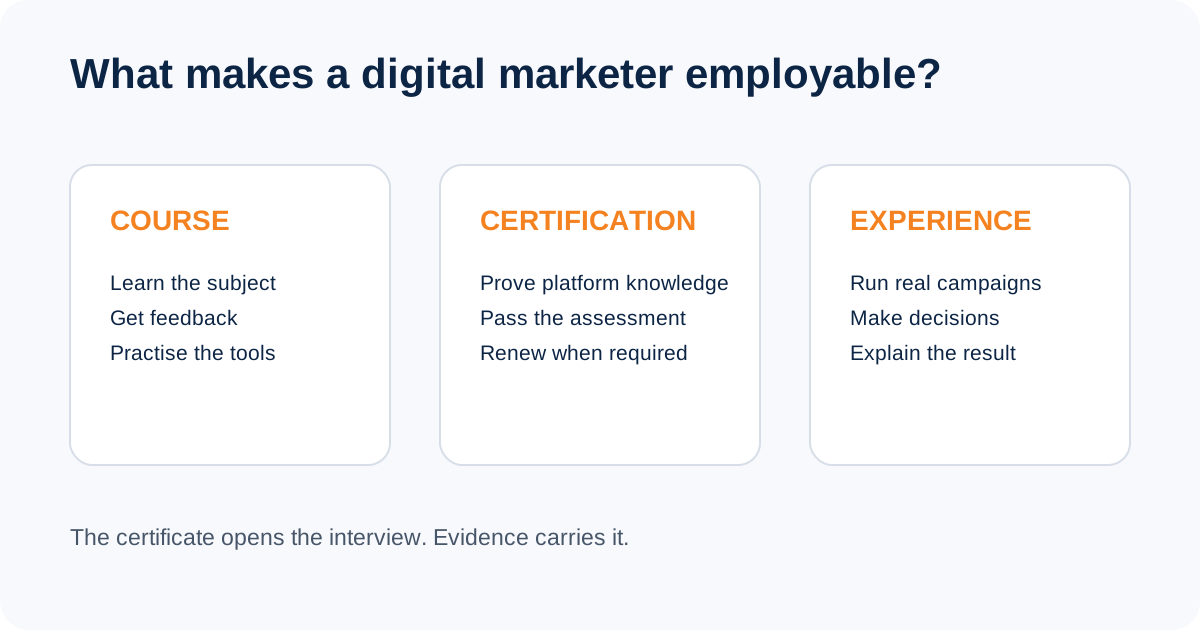
Name the official documentation you actually use, a recent change you verified and how it affected your work. Google provides product training and Google Ads certification through Skillshop. A certificate can support your preparation, but it does not replace evidence that you can diagnose a real account.
15. Why should we hire you?
Connect your evidence to the role. A useful structure is: “You need someone who can do X. In this project I did Y, measured Z and learned A. I can bring that process here.” Do not copy a claim about being hardworking or a fast learner unless you can support it with an example.
How to answer when you have no job experience
Build a small, honest project before the interview. Audit a site you own, create a keyword-to-page map, plan a campaign with a stated budget, configure a test analytics property or publish and measure a short content series. Label simulations as simulations. Never invent spend, access, clients or results.
Bring a short portfolio showing the brief, your work, evidence, decision and reflection. Remove customer data and account identifiers unless you have permission to share them. The interviewer needs to see how you think, not confidential screenshots.
Questions to ask the interviewer
- Which business outcomes will this role own in the first three months?
- Which channels, markets and languages are in scope?
- How are qualified leads or sales connected back to campaign reporting?
- Who approves creative, budgets and tracking changes?
- What would a good first 90 days look like?
If you need practical work before applying, compare our digital marketing training in Dubai and live online. The channel courses use real tools and current account workflows rather than interview definitions alone.
FAQs
What should I prepare before a digital marketing interview?
Prepare one real campaign or project you can describe from goal to result, the job description, the company’s current marketing and several questions for the interviewer. Be ready to explain your own contribution without claiming the whole team’s work.
What do employers look for in a junior digital marketer in the UAE?
Requirements vary by employer. Useful evidence includes a clear portfolio, accurate platform knowledge, comfort with measurement and an example of learning from results. Language, sector and channel requirements depend on the role, so read the job description rather than assuming one UAE standard.
How do I answer if I have no professional experience?
Use a real course, personal or volunteer project and be transparent about its scope. Explain the brief, your decisions, what you measured and what you would improve. If it was a simulation, say so. Never present invented clients, spend or outcomes as experience.
What technical questions come up most often?
They depend on the role. Common areas include campaign planning, GA4 events and key events, search intent, Google Ads quality and search terms, SEO diagnosis, social measurement and how you would investigate a performance change.