 Training guide
The Power of Data Analytics in Modern Marketing
What marketing data analytics involves, how to use it without drowning in dashboards, and how the free GA4 certification works now that GAIQ has been retired.
What marketing analytics should tell you
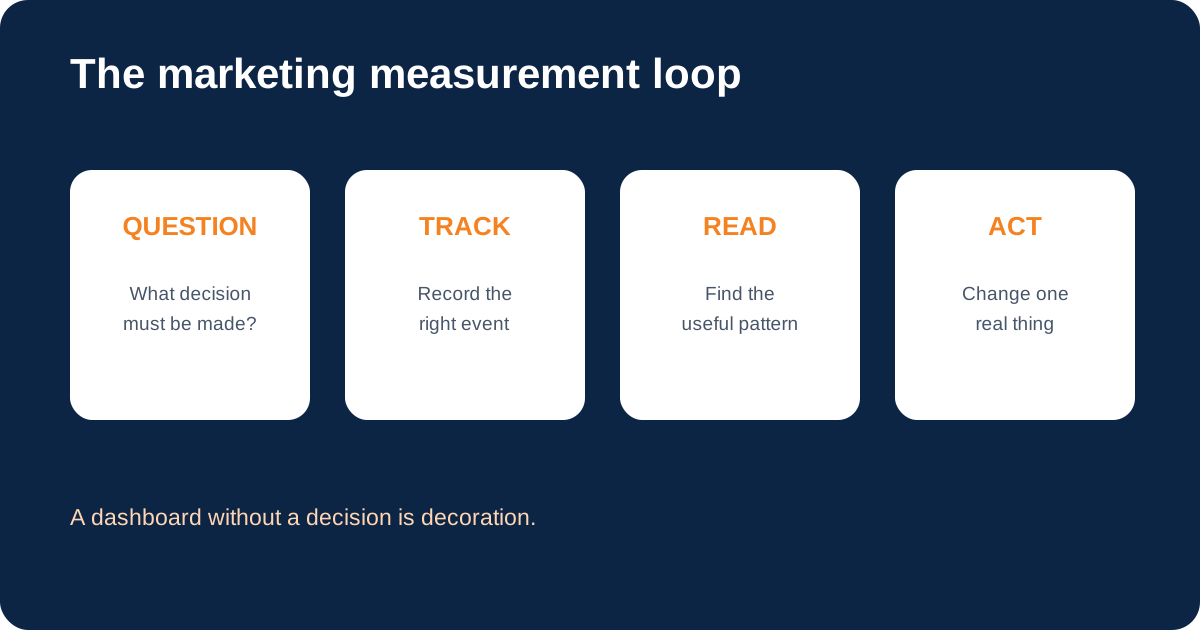
In short: marketing analytics is collecting the right data, reading it honestly and changing something because of it. Most of it runs through Google Analytics, which is free, and the version that matters is GA4 since Universal Analytics stopped processing data in July 2023. Decide which actions count as results before you open a single report.
Marketing analytics connects an activity to a business result. It should tell you which source brought the right visitor, what that person did, which action became a qualified lead or sale, and what the result was worth. Traffic without that connection is activity, not evidence of growth.
Start with the decision you need to make. If the question is where to place next month’s budget, you need reliable campaign cost, qualified leads and revenue. Page views and social reach may explain the path, but they cannot answer the budget question by themselves.
A simple measurement plan
- Write the business question. Examples include which campaign creates qualified enquiries, which landing page loses visitors, or which channel brings repeat customers.
- Name the result. Choose the completed action that matters, such as a purchase, paid booking, qualified call or accepted sales lead.
- Map the steps before it. Record only the useful actions that explain progress, such as viewing a service, starting a form or selecting a product.
- Choose a source of truth. GA4 explains website behaviour. An advertising platform reports spend. A CRM or commerce system confirms lead quality and revenue.
- Assign an owner and review date. A report needs somebody responsible for checking the data and changing a decision.
Do not ask one tool to answer everything
- GA4: website and app behaviour, traffic acquisition, events and key events.
- Advertising platforms: media cost, impressions, clicks and platform-attributed results.
- Search Console: Google Search queries, pages, clicks, impressions and indexing information.
- CRM: lead ownership, sales stage, qualification, follow-up and closed revenue.
- Commerce or finance records: completed orders, refunds, margin and recognised revenue.
The numbers will not always match. Platforms use different attribution rules, time zones, identity methods and processing windows. Investigate large unexplained gaps, but do not force every system to report the same total. Agree which system answers each question.
The weekly marketing review
A useful review is short enough to repeat. Check whether tracking is healthy, compare spend with qualified outcomes, find the largest change, explain what may have caused it, and write down one action with an owner. Separate an observation from an explanation. “Leads fell” is a fact in the report. “The new advert caused it” is a hypothesis until the evidence supports it.
Check the data before acting on it
- Submit each important form and confirm the event appears once, not twice.
- Check that campaign tags survive redirects and landing-page navigation.
- Compare website leads with CRM records for the same dates.
- Exclude internal and test activity where the setup allows it.
- Annotate tracking, website, campaign and consent changes that may affect the trend.
- Do not send personal or sensitive information in analytics event names or parameters.
Google Analytics, and what changed with GA4
Most of the above runs through one tool. Google Analytics tracks who arrives, what they do and what they do not do, and it is free, which is why it sits under most marketing teams whatever else they buy.
The thing to know if you learned it before 2023: Universal Analytics stopped processing data in July 2023 and GA4 replaced it. GA4 is not a redesign, it is a different model. It counts events rather than sessions and pageviews, so reports, goals and much of the vocabulary changed with it. Guides written for Universal Analytics will not map onto what you see on screen.
- Set the goal before the tool. Decide which actions count as a result, then configure GA4 to record those, rather than reading every report hoping for a story.
- Watch a handful of numbers. Traffic sources, conversion rate and what people do before converting will answer most questions. The rest is detail.
- Connect it to Google Ads and Search Console. Analytics on its own tells you what happened; connected, it tells you which spend caused it.
- Check it is recording correctly before you trust it. Most bad marketing decisions built on analytics come from broken tracking, not bad judgement.
A beginner’s first four GA4 reports
Start with traffic acquisition to see where visitors came from, engagement to see what they used, key events to see which important actions were recorded, and explorations when the standard reports cannot answer a specific question. Learn those four before building dashboards. The useful habit is to open a report with a question, not to browse until a number looks interesting.
The Google Analytics certification
The certification is free, it runs on Google Skillshop, and it covers GA4 only. If you have seen it called GAIQ, that was the old name, and it was retired along with Universal Analytics. It is no longer taken through Google Partners, and the Google Analytics Certified Partner badge that older guides mention no longer exists.
- Available through Google Skillshop with free learning material.
- Focused on GA4 rather than the retired Universal Analytics interface.
- Valid for one year unless the issued certificate states otherwise.
- Taken separately from Leads Dubai training.
The exam tests whether you know the platform. It does not test whether you can read data and change a decision because of it, which is the part employers actually pay for. Our Google Analytics training in Dubai works on live accounts and covers the certification alongside it.
FAQs
Is the Google Analytics certification free?
Yes. Both the training material and the exam are free on Google Skillshop. You only pay if you want structured teaching and practice on real accounts alongside it.
What happened to GAIQ?
It was renamed. The Google Analytics Individual Qualification became the Google Analytics Certification when Universal Analytics was retired in July 2023, and it now covers GA4 only. Anything telling you to sit it through Google Partners is out of date.
Does the certification expire?
Yes, after 12 months. That is deliberate, because the platform keeps changing, and it is worth retaking rather than listing an expired credential.
Do I need to learn Universal Analytics as well?
No. It stopped processing data in July 2023 and the historical data has largely gone with it. Learn GA4. The only reason to understand the old model is to follow older articles without being confused by them.
Is a certification enough to get an analytics job?
On its own, no. It proves you know the interface. What gets you hired is showing you have used it on a real account, found something that mattered and changed what the business did next. Build that story while you study.