 Training guide
Performance Max: How It Works and How to Control It
How Performance Max works, what you can control with negative keywords, brand exclusions and search themes, and when a Search campaign is the better choice.
The controls Google has added since launch
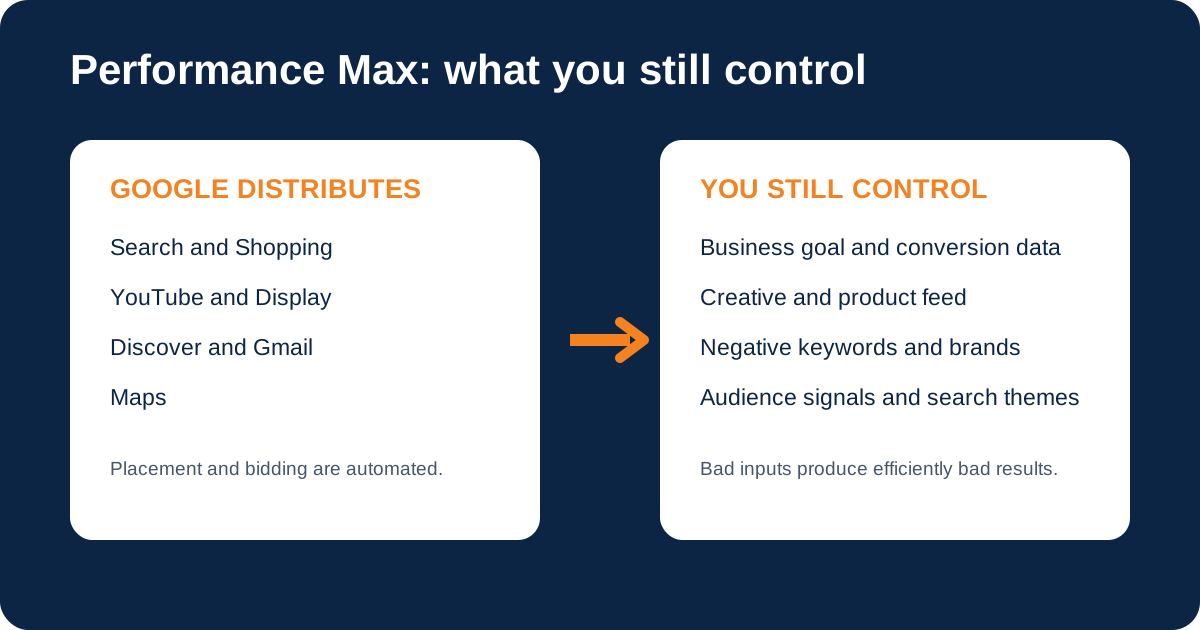
In short: Performance Max is one campaign that runs across Search, Shopping, Display, YouTube, Discover, Gmail and Maps, with Google deciding placement and bidding. It launched as close to a black box, but campaign negative keywords, brand exclusions, channel-level reporting and search themes have since been added. It rewards good feed, creative and conversion tracking, and wastes money quickly without them.
Performance Max launched as close to a black box, and most of the criticism of it dates from that period. Google has since given back a lot of the control advertisers asked for. If you dismissed it at launch, these are what changed:
- Campaign-level negative keywords. They affect Search and Shopping inventory, so use them for queries you know should never trigger the campaign. Google explains the current setup in its Performance Max negative-keyword guide.
- Brand exclusions. Keep the campaign away from your own or another named brand. Retail advertisers can exclude the brand from Search text ads while allowing Shopping ads to continue.
- Channel-level reporting. The channel performance report shows cost, interactions, conversions and conversion value by channel, rather than one blended number.
- Search themes. You can add up to 50 per asset group. They give Google context it may not infer from the feed, assets or landing page, but they are signals rather than normal keywords.
- Asset group reporting. Which creative is actually carrying the campaign, rather than guessing. Video capacity per asset group has also increased substantially.
- Account-level placement exclusions. Useful for keeping ads off the placements you do not want to be seen on.
Where it sits now, and what is changing around it
Two shifts matter for campaign planning. Google Display Ads campaigns are moving into Demand Gen. Google opened voluntary migration for eligible advertisers in June 2026 and says forced migration is coming later, without publishing one final completion date. Demand Gen allows channel controls, including Google Display Network inventory. AI Max is changing Search campaigns too. Google currently says Dynamic Search Ads will begin automatic upgrades to AI Max in February 2027.
Current references: Google Display Network integration with Demand Gen and Google’s Dynamic Search Ads transition notice.
The pattern is the same in each case: fewer campaign types, more automation, and the advertiser feeding the system rather than steering it. Performance Max was the first move in that direction rather than an experiment alongside the old way of working.
How to run it without wasting the budget
- Fix conversion tracking first. Performance Max optimises toward whatever you tell it counts. Point it at the wrong event and it will get very good at producing the wrong thing.
- Give it real assets. It can only assemble what you upload. Thin creative is the most common reason a campaign underperforms, and it is entirely within your control.
- Add the negatives and brand exclusions on day one, not after the first invoice.
- Keep Search where you need keyword control. Eligible identical exact-match Search keywords take priority over Performance Max. Use brand exclusions when you also need Performance Max kept away from branded traffic.
- Give it time before judging. Google says significant changes can lead to a learning period of two to three weeks. Avoid frequent budget or bid changes during that period, and use the channel report to investigate the movement rather than reacting to one day.
FAQs
Is Performance Max worth using for a small budget?
It can be, but it needs enough conversions to learn from, so a very small budget spread across every channel often learns nothing. If you are spending modestly, a tightly targeted Search campaign usually returns more. Add Performance Max once you have conversion data flowing and something to feed it.
Can you control where Performance Max ads appear?
More than you used to. Campaign and account-level negative keywords, brand exclusions and account-level placement exclusions all exist now. What you still cannot do is choose channels individually, so you get Search, Shopping, Display, YouTube, Discover, Gmail and Maps as a package and steer it with exclusions rather than selections.
What is the difference between Performance Max and Demand Gen?
Performance Max chases conversions across Google inventory, including Search and Shopping. Demand Gen is the visual campaign type used across YouTube, Discover, Gmail and the Google Display Network. Use Performance Max when conversion data is strong and you want cross-channel automation. Use Demand Gen when the job is to create interest with image and video assets.
Why is my Performance Max campaign spending but not converting?
Usually one of three things: conversion tracking pointing at the wrong event, so it is optimising toward something that is not a sale; thin creative, since it can only assemble what you upload; or no negatives, so it is buying searches that were never going to buy. Check them in that order before touching the budget.
Should I run Performance Max and a Search campaign at the same time?
Yes. Keep Search campaigns for queries where you need keyword and ad control. An eligible identical exact-match Search keyword takes priority over Performance Max. If branded traffic should stay in Search, apply a brand exclusion to Performance Max and check the search-term reporting after the change.