 Training guide
Search Engine Marketing Strategy: SEO and PPC Together
Build a search engine marketing strategy that joins SEO and PPC, uses paid data to guide content and measures both channels by qualified enquiries.
SEO and paid search do different jobs
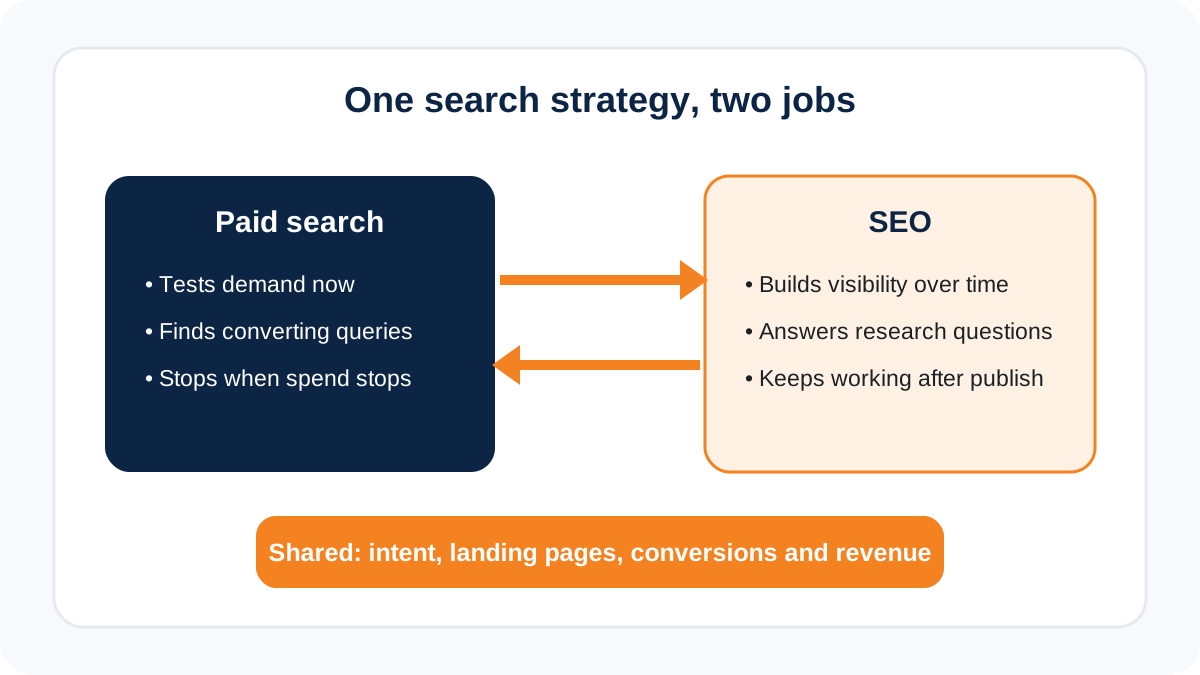
In short: paid search can produce visibility as soon as a campaign is eligible, while SEO earns unpaid visibility over time. Paying Google does not improve organic rankings. The useful connection is data: paid search can test which queries produce qualified enquiries, while Search Console shows where the site already earns organic visibility.
Paid search can put an advert in front of an active searcher as soon as the campaign is eligible. SEO earns unpaid visibility over time. Paying Google does not improve organic rankings, but paid search can reveal which queries produce useful enquiries. That evidence can improve the organic plan.
Plan by search intent, not by department
- Immediate commercial intent: paid search can test demand while the organic page develops authority.
- Comparison and decision queries: build a useful organic page and use ads where the value of being visible immediately justifies the cost.
- Research questions: SEO and useful content normally make more sense than paying for every visit.
- Brand searches: protect the result page, make the official site clear and check whether paid coverage adds incremental value rather than assuming it does.
- Local intent: coordinate the website, Google Business Profile, location pages and paid location targeting.
Use paid-search data carefully
Search-term reports show what triggered an advert and which tracked actions followed. Before turning that into an SEO brief, check lead quality and the actual result page. A term can convert in an advert yet require a different organic page, or it may be too narrow to justify permanent content.
Use the Search Console performance report to see which organic queries and pages already earn impressions. Compare that with advertising cost, conversions and CRM outcomes. Neither platform should be treated as the complete source of truth.
A practical 90-day search plan
- Days 1 to 14: verify conversion tracking, group the highest-intent queries and check the landing pages.
- Days 15 to 30: run a controlled paid-search test, review search terms and compare enquiries with CRM quality.
- Days 31 to 60: improve or create organic pages for proven needs, using original examples and clear answers.
- Days 61 to 90: compare qualified outcomes by query and page, then decide where paid coverage should continue.
Measure the combined result
Report cost, qualified enquiries, sales and revenue where available. Use clicks, impressions and position to diagnose performance, not as the final business result. Keep SEO and advertising data separate enough to audit, then bring them together around the same query groups and outcomes.
Leads Dubai teaches these disciplines separately through SEO training and Google Ads training. The connection is the shared research, landing-page work and conversion measurement.
FAQs
What is the difference between SEO, PPC and SEM?
SEO focuses on unpaid search visibility. PPC describes advertising charged by the click, including paid search. SEM is sometimes used for paid search alone and sometimes as the wider discipline covering both, so define the term when planning work.
Do Google Ads improve organic rankings?
No. Advertising spend is not an organic ranking factor. Ads can supply useful query and conversion evidence, but the organic page still needs to earn its position through relevance, quality and other search signals.
Should a new business begin with SEO or paid search?
Paid search can test demand quickly. SEO can reduce dependence on buying every visit, but it takes longer. If the budget permits, use a controlled paid test to learn while building the organic pages the business will need over time.
How should the budget be split?
There is no universal ratio. Base it on urgency, existing rankings, click cost, margins and the value of a qualified enquiry. Review the split using business outcomes rather than allocating a fixed percentage forever.