 Training guide
How to Do Keyword Research Properly
Research keywords by intent, check real results, find Search Console opportunities and map each primary query to one page without cannibalisation.
Keyword research should end with a page decision
In short: keyword research is brainstorm, tool, list, then the part most people skip, which is sorting every term by intent. Ten searches for "hire an SEO consultant in Dubai" beat ten thousand for "what is SEO". If the site has history, Search Console is the best free source you own, because it reports what you already rank for.
Keyword research is the process of finding how customers search, understanding what they expect to see, and assigning each useful query group to the right page. A spreadsheet of volumes is only an input. The output is a page map that tells a writer or site owner what to create, improve, merge or leave alone.
Step 1: collect language from customers and the site
Start with sales calls, enquiries, support tickets, product names and the words customers use when they do not know your industry terminology. Then inspect Search Console. Its Performance report shows the queries and pages where the site already earns impressions, clicks and positions. Google explains the available query and page dimensions in its Search Console Performance report guide.
Step 2: expand the list without trusting one tool
- Search Console for existing visibility and near-page-one opportunities.
- Keyword Planner for paid-search demand ranges and commercial phrasing.
- Autocomplete and related searches for wording and useful subtopics.
- Competitor pages for coverage gaps, not text to copy.
- Your CRM for terms that lead to qualified enquiries and sales.
Search volume is an estimate, not a promise. It can be especially thin for niche UAE services, Arabic queries and long questions. A low-volume phrase used by several real customers may be more valuable than a large informational term that never leads to business.
Step 3: identify the intent from the results
Search the term and inspect the page types that appear. Product pages suggest purchase intent. Service pages suggest a provider search. Guides, videos or tools suggest the visitor needs help before acting. If you planned a blog but the results are commercial pages, changing the wording will not fix the intent mismatch.
Step 4: group terms that need the same answer
Close variations belong together when one page can satisfy them naturally. Separate them when the visitor needs a different decision, service, location or format. Do not build a page for every wording variation. That creates thin pages competing for the same purpose.
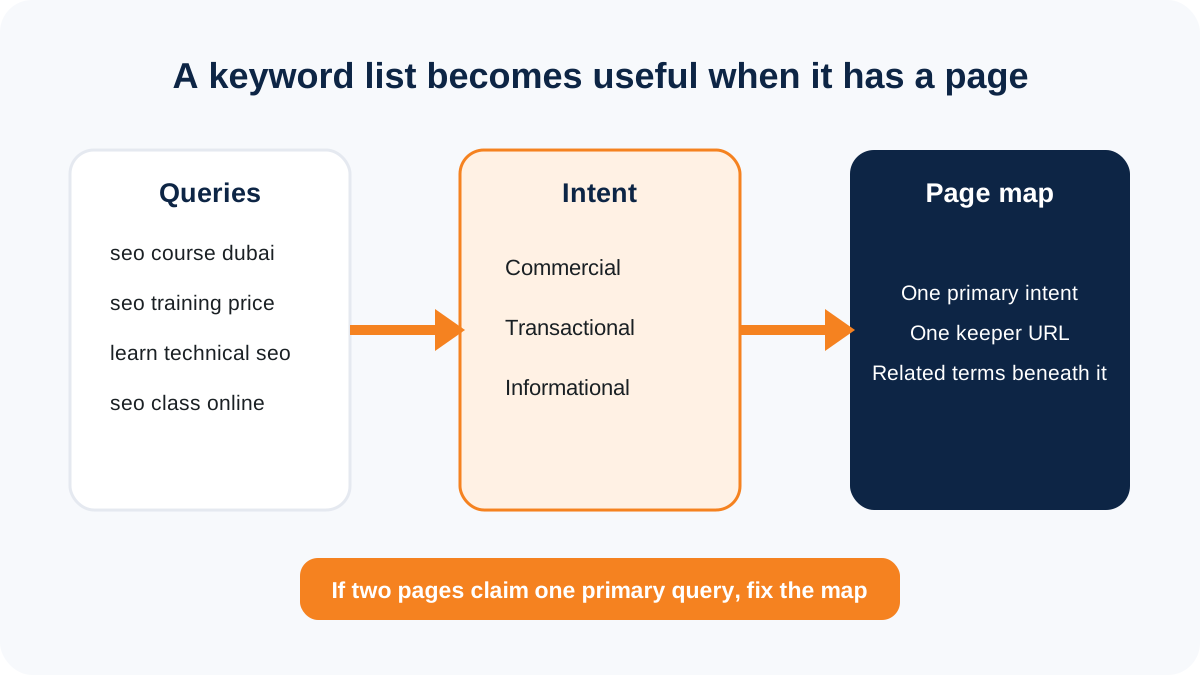
Step 5: assign one keeper page and one next action
Record the primary query group, intent, keeper URL, supporting questions, current position, business value and next action. The action may be update, create, merge, redirect or monitor. A page already ranking with the correct intent often needs a careful improvement, not a replacement.
Step 6: prioritise with evidence
Balance relevance, current visibility, realistic competition, effort and the value of the action after the click. Ten searches from people ready to request a quote can matter more than thousands of broad searches. State what is estimated and what comes from verified Search Console, CRM or advertising data.
Step 7: measure the page, not only the keyword
Record the change date and watch the page’s impressions, clicks, query mix and conversions over a suitable period. Rankings move for many reasons, so do not claim one edit caused a result without stronger evidence. Use what you learn to improve the page map.
Our SEO training in Dubai teaches this workflow on a live site. The paid course runs within one week, includes 10 taught hours and is available in Dubai or live online. Fees start from AED 3,000 per person.
FAQs
What is the best free keyword research tool?
For an established website, start with Google Search Console because it shows the queries where your own pages already appear. Combine it with search-result inspection and customer language rather than relying on one database.
How many keywords should one page target?
One coherent intent group, which may contain many close phrases. The deciding question is whether the same page can give every variation a satisfying answer.
How often should keyword research be updated?
Review priority pages when products, customer language, search results or performance change. A fixed quarterly review can help, but important commercial or platform changes should trigger an earlier check.