 Training guide
International SEO: Reaching New Markets
How international SEO works: subfolders versus country domains, hreflang without the common errors, and why translating a keyword list does not work.
International SEO starts with a market, not a translation
In short: international SEO means choosing how markets are separated, then telling search engines which version belongs to whom. Subfolders suit most businesses because authority earned anywhere helps everywhere; country domains suit markets where local trust drives the sale. hreflang handles the targeting, and it fails most often on missing return links. Research keywords natively rather than translating a list.
International SEO helps the right country or language version of a website appear for the right searcher. The first question is commercial: which market can you serve properly? Check demand, delivery, local pricing, support and legal requirements before creating another version of the site. Three well-supported markets are more useful than twenty translated shells.
A multilingual site serves more than one language. A multi-regional site serves more than one country or region. A site can be both, such as separate English and Arabic pages for the UAE plus Arabic pages for Saudi Arabia. Keeping that distinction clear prevents a common mistake: treating every Arabic-speaking market as if customers search and buy in the same way.
Choose the URL structure before building pages
- Subfolders, such as example.com/ae/, suit most businesses. They keep markets on one domain and are easier to maintain.
- Country domains, such as example.ae, can make the local market obvious to visitors. Each domain needs its own technical upkeep, content and authority.
- Subdomains, such as ae.example.com, can solve hosting or organisational needs, but they add operational complexity without automatically improving rankings.
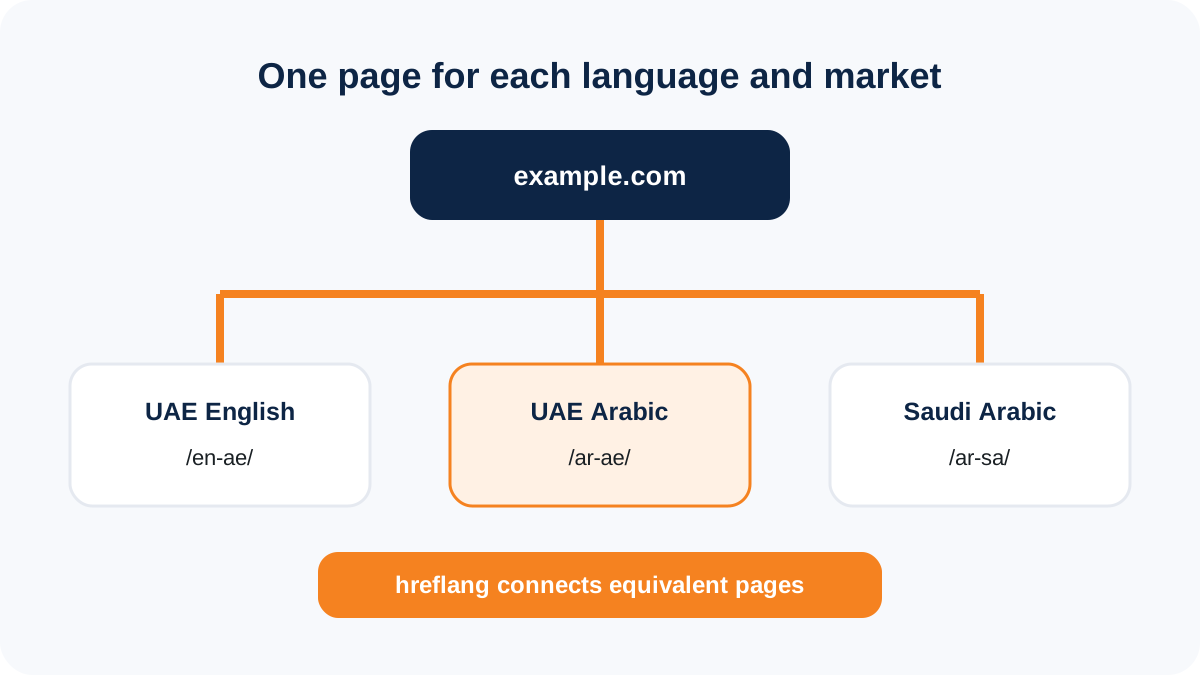
Google supports several structures. There is no universal winner. Pick the one your team can keep accurate for years, then use consistent internal links and locale annotations. Avoid changing the whole page only from an IP address or browser language because search crawlers may not discover every version. Google recommends separate URLs for language versions.
How hreflang works
hreflang connects equivalent pages and states the language, with an optional region. It helps Google choose the appropriate version. It is not a ranking boost. Each page should reference itself and every equivalent version, and those pages must return the same references.
- Use valid codes. For example, en-GB is valid while en-UK is not.
- Add return links. If the UAE English page names the UAE Arabic page, the Arabic page must name the English page.
- Use x-default where useful. This can identify a language selector or neutral fallback.
- Keep every target indexable. Do not point hreflang at a redirect, error page or URL canonicalised elsewhere.
- Self-canonicalise locale pages. Do not canonicalise an Arabic page to its English equivalent merely because the meaning is similar.
Research demand in the language customers use
Do not translate an English keyword list word for word and call it research. Review local search results, Search Console data, sales conversations and the language used by local competitors and customers. Arabic phrasing can differ by market, and English searches are common in parts of the Gulf. A native reviewer should check meaning, tone and local terminology before publication.
Localisation includes currency, delivery details, contact routes, examples, imagery and the action after the click. If a visitor reaches a local page but the company cannot quote, deliver or answer in that market, the SEO work has created the wrong traffic.
A practical launch checklist
- Confirm demand and the business owner for each market.
- Map one locale URL to each real page, not every possible query variation.
- Localise the copy and metadata with a native reviewer.
- Add self-canonicals, hreflang and crawlable language links.
- Test redirects, status codes, mobile layout and forms from each market.
- Measure qualified enquiries and revenue by market, not rankings alone.
Our SEO training in Dubai covers the technical checks on a live site. It runs within one week, includes 10 taught hours and is available in Dubai or live online. Fees start from AED 3,000 per person.
FAQs
Do I need hreflang for different English-speaking countries?
Use it when separate pages genuinely serve different countries, such as different prices, products or delivery terms. Do not duplicate the same English page across country folders merely to target more locations.
Should translated pages use one canonical URL?
No. A useful translated page normally has its own self-referencing canonical. hreflang connects it to equivalent language or regional versions.
Can AI translate an international website?
It can produce a draft, but a native reviewer should check accuracy, terminology and cultural fit. Publishing large volumes of unchecked translated pages creates quality risk and can leave customers with incorrect commercial information.