 Training guide
How to Build a Personal Brand Online
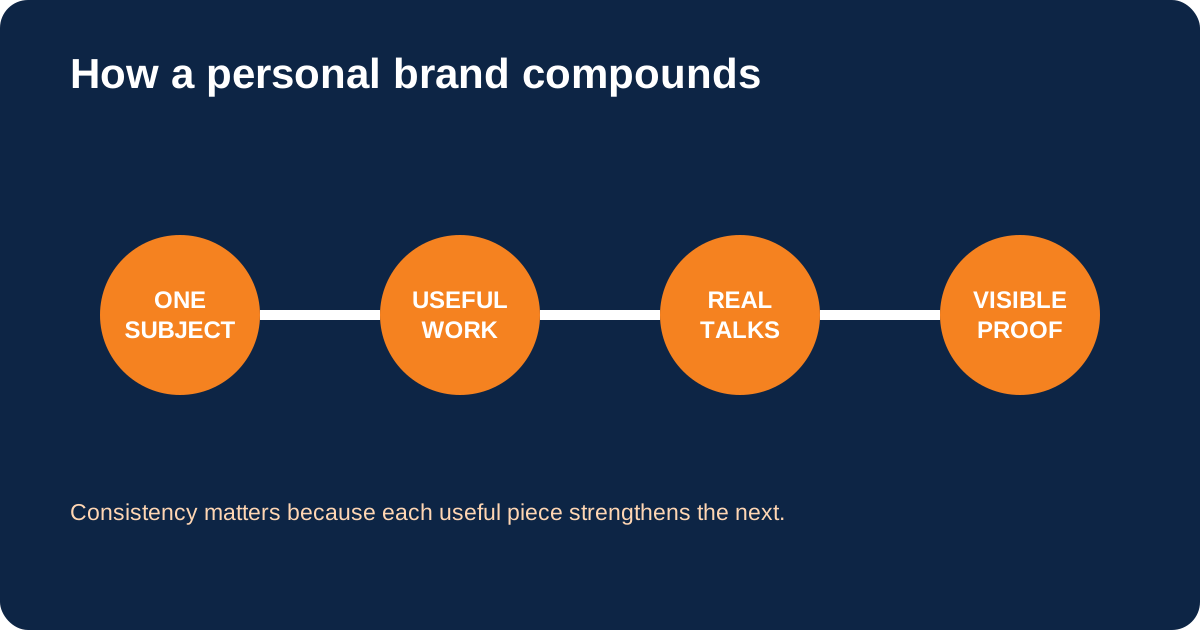
How to build a personal brand online: pick one subject, pick the platform your audience uses, publish consistently, and turn the attention into real conversations.
In short: a personal brand is what people can already say about you when you are not in the room. Building one online means picking one subject you want to be known for, choosing the one platform where that audience actually gathers, publishing consistently enough to be remembered, and turning the attention into conversations. It compounds slowly and then all at once.
A personal brand is the professional reputation attached to your name. Building one online means making it easy for the right people to understand what you know, see proof of your work and contact you. Start with one audience and one useful subject. A logo, colour palette or large follower count cannot replace clear positioning and credible evidence.
Decide what the personal brand should achieve
Choose the next action you want from the reader: consider you for a role, request a service, invite you to speak, refer work or follow your analysis. This decision changes what you publish and where. A job seeker needs evidence of skills and judgment. A consultant needs evidence that they understand a costly client problem.
- Audience: whose attention would create the right opportunity?
- Problem: which problem can you explain or solve credibly?
- Proof: what work, result, process or experience can you show?
- Action: what should an interested person do next?
Write a positioning sentence you can prove
Use a plain sentence: “I help [specific audience] with [specific problem] using [relevant experience or method].” Treat it as a working direction, not a slogan. Remove any claim that your work cannot support. “I document what I am learning about paid search” is more credible for a beginner than claiming to be a growth expert.
Audit what people already find under your name
Search your name in a private browser, then add your role, company and location. Check the first results, image results and major profiles. Record incorrect, outdated or conflicting information. You may not control every result, but you can make your current profile, employer page, portfolio and published work clearer and easier to verify.
Build a small proof library
Proof makes a personal brand useful. Collect work samples, before-and-after examples, talks, articles, credentials awarded by their actual issuer and recommendations you have permission to publish. Protect client data. If a project is illustrative or completed during training, label it that way rather than presenting it as paid client work.
- Show the problem and the constraints.
- State your exact role and what others handled.
- Explain the decision you made and the evidence behind it.
- Show the outcome only when you can substantiate it.
- Add what you learned or would change next.
Choose one main platform and one home base
Pick the platform where your intended audience already pays attention. LinkedIn often suits professional services, hiring and B2B work. Instagram and TikTok can suit visual, consumer and creator-led subjects. YouTube suits demonstrations and detailed explanations. These are starting points, not rules. Check where your own customers, employers or peers are active.
Keep a home base you control, such as a portfolio or website, for your biography, proof and contact route. On LinkedIn, the Featured section can display work samples, and eligible professionals can create a Service Page from a personal profile. See LinkedIn’s Featured section guidance and Service Page instructions.
Publish from real work, not a content persona
Write down questions you are asked, decisions you made, mistakes you corrected and changes in your field. Turn each into a short explanation, worked example or opinion with evidence. This gives you material that sounds like you because it began with your work rather than a generic content calendar.
- Explain: answer one question your audience genuinely asks.
- Show: demonstrate a process, document or decision with confidential details removed.
- Reflect: explain what changed your view and what evidence caused the change.
Use AI as an assistant without losing your voice
AI can organise notes, suggest formats or help edit a draft. It cannot supply your experience, judgment or evidence. Begin with your own example and point of view, check every material claim, remove wording you would not say and take responsibility for the published version. Never generate customer praise, credentials, results or personal stories that did not happen.
A practical 30-day personal brand plan
- Days 1 to 5: define the audience, desired action and one subject you can support with real work.
- Days 6 to 10: update the main profile, biography, photograph, contact route and three proof items.
- Days 11 to 20: publish three useful pieces based on questions, processes or lessons from your work.
- Days 21 to 25: reply thoughtfully to relevant people and continue useful conversations without pitching strangers.
- Days 26 to 30: review profile visits, relevant replies, enquiries and introductions, then plan the next month from what resonated.
Measure opportunities, not popularity alone
Followers and impressions describe distribution. Track profile visits from relevant people, portfolio views, replies, introductions, interview requests, qualified enquiries and work won. Record where each opportunity started. A smaller audience can be more valuable when it contains the people you intended to reach.
To build the supporting channel skills, compare our digital marketing training in Dubai and live online, including social media, content, SEO and analytics.
FAQs
How long does it take to build a personal brand?
There is no reliable universal timeline. You can make your positioning and proof clearer within days, but recognition depends on your starting reputation, audience, publishing quality and real-world work. Review meaningful conversations and opportunities monthly rather than promising a result by a fixed date.
Which platform is best for a personal brand?
Use the platform where the people you want to reach already pay attention and where your format fits. LinkedIn may suit B2B and hiring, visual platforms may suit consumer or creative work, and YouTube may suit demonstrations. Validate this against your own audience rather than copying a general rule.
Do I need to show my face to build a personal brand?
No. A recognisable photograph helps people connect your name with your work, but you can build professional credibility through writing, audio, presentations, code, design or documented results. Choose a format you can sustain and let the work carry the claim.
Can a personal brand help my business or does it compete with it?
It can support the business when your expertise, role and company relationship are clear. Agree ownership of accounts, customer information and published material. Keep company channels and contact routes healthy so attention and enquiries do not depend entirely on one individual.