

On 20 May 2026, Google held its biggest advertising event, Google Marketing Live 2026. If you spend money on Google Ads, or you are planning to, this is one update you should not skim past.
Here is the short version. Google’s AI, Gemini, is no longer just a helpful feature tucked inside your campaigns. It has quietly become the engine running the whole machine how your ads are written, how they get matched to searches, how your creative is produced, and how your results are measured.
We went through the announcements so you do not have to. Below is a plain-English breakdown of what actually changed, why it matters for businesses here in the UAE, and the exact steps we would recommend over the next 30 days.
What is Google Marketing Live 2026?
Google Marketing Live is Google’s annual event where it reveals what is coming next for advertisers across Search, YouTube, Shopping and measurement. The 2026 edition was streamed from Google’s campus in Mountain View to marketers in more than 100 countries.
The theme this year was easy to say and hard to ignore: use AI to create, capture and convert demand. Almost every announcement circled back to one idea Gemini is now the operating layer underneath Google Ads, not a side tool.
The big shift: AI moved from helper to operator
For years, AI in Google Ads handled small jobs in the background. Smart Bidding here, a responsive headline there. That era is over.
At Google Marketing Live 2026, Google made it clear that AI now sits at the centre of the account. For advertisers, the change shows up in five ways:
- Search is conversational. People ask longer, fuller questions with text, images and voice instead of typing two or three keywords.
- Ads behave like answers. Relevance now depends on context and intent, not just the keywords you picked.
- YouTube is a performance channel. It is no longer only about views and reach. It is tied directly to shopping and conversions.
- Commerce is agentic. Product discovery, offers and checkout are becoming one connected flow.
- Measurement is predictive. Reporting is moving from “what got the last click” to “what will drive future business”.
The takeaway for your team: less time on manual button-pushing, more time on strategy, creative, and clean data.
Search ads are becoming answers, not just ads
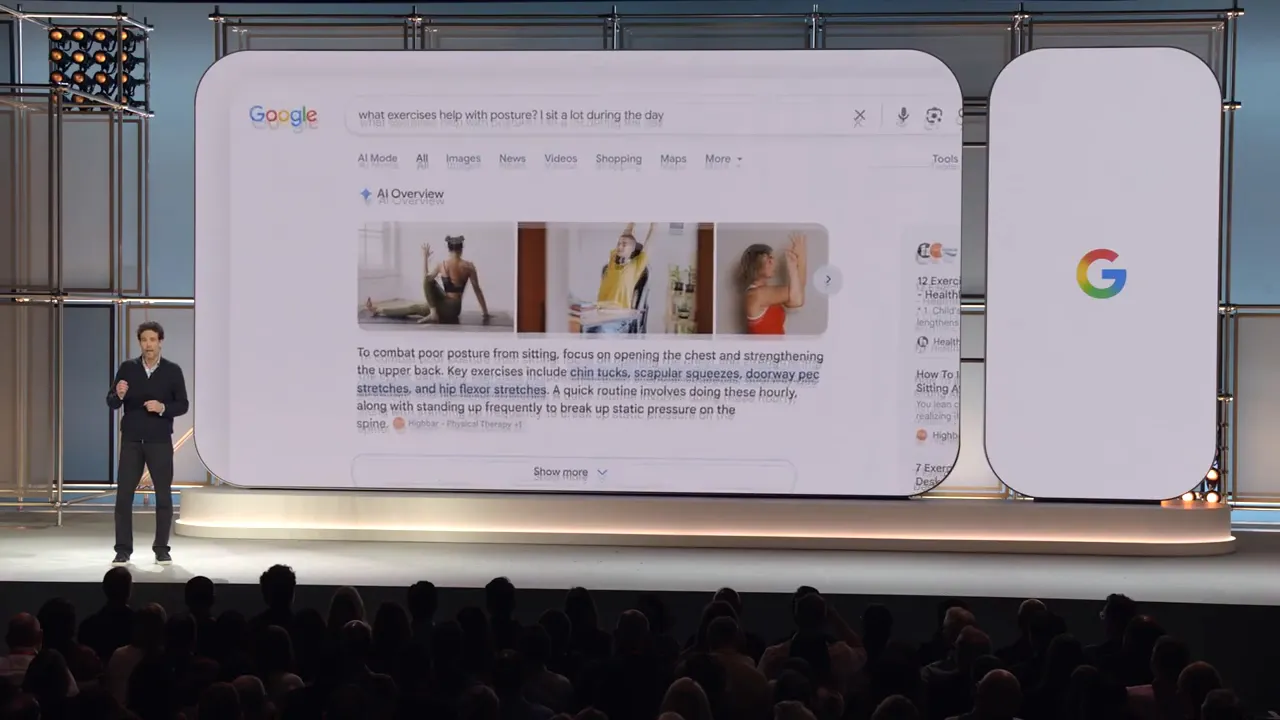
This was the heart of the keynote. As people use AI Mode and conversational search, a plain ad that just “looks relevant” is not enough anymore. The ad now has to help solve the problem.
Google introduced several new Gemini-powered ad formats built for this: ( We loved this part more )
- Conversational Discovery ads that respond to a person’s specific question with tailored creative.
- Highlighted Answers relevant ads that surface inside AI Mode results.
- AI-powered Shopping ads product ads with plain-language feature summaries.
- Business Agent for Leads a conversational ad experience that answers questions and helps qualify a prospect before they ever fill in a form.
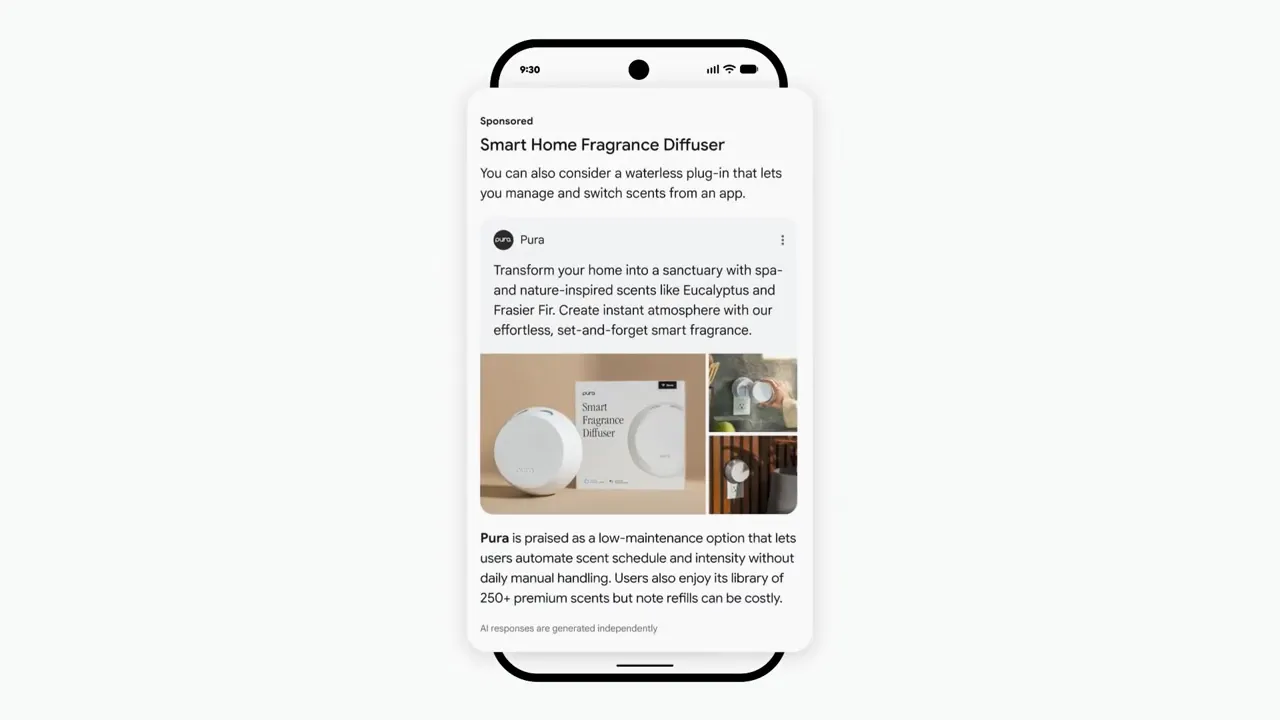
Google also expanded Direct Offers, which now build AI-generated bundles and promotions, with native checkout and travel deals included.
So what does this mean for you? The “best ad” is now the most useful ad. To get the most out of these formats, you will need to:
- Feed Google strong assets, good text, images, video and product data.
- Give clear brand direction so the AI knows your voice and your limits.
- Make sure landing pages actually match the question and the ad’s promise.
- Stop depending only on tight manual keyword lists.
The same logic applies on the organic side. AI search rewards content that is genuinely useful and specific. If your SEO is thin or generic, now is the time to fix it because AI systems are getting better at ignoring filler.
AI Max and Performance Max: Is it time to switch?
Two campaign types sit at the centre of Google’s plan: AI Max for Search and Performance Max.
AI Max for Search just turned one. Google says it is now available globally and reported that it drove around 27% more conversions compared with manual campaigns. There is also a new AI Max for Shopping built for retailers.
One date worth circling: Google confirmed that Dynamic Search Ads will move into AI Max, with the migration becoming mandatory from September 2026. If you still run Dynamic Search Ads, treat that as a deadline, not a suggestion.
Performance Max remains Google’s cross-channel campaign reach, YouTube, Shopping, Gmail, Maps and more, all in one place.
These campaign types make the most sense when:
- Your search terms are broad, varied or hard to predict.
- You sell across several categories or product lines.
- You want cross-channel reach with one optimisation engine.
- You have enough conversion data to train the system properly.
Honest take from our side: if your account is still 100% manual keyword campaigns, that is the biggest gap to fix this quarter. Our Google Ads team in Dubai can audit your setup and tell you exactly where automation will help and where it will not.
YouTube is now a serious performance channel
For a long time, businesses treated YouTube as a “brand awareness” line item. After Google Marketing Live 2026, that thinking is outdated.
The big updates landed inside Demand Gen Google’s campaign type for visual, intent-aware ads across YouTube, Discover, Gmail and now Google Maps. New features include:
- Creator partnership tools, so you can use creator content inside your campaigns.
- Google Maps inventory as a new placement.
- Dynamic product video distribution.
- AI-assisted campaign setup.
Google also shared some numbers worth noting. Adding creator assets to Demand Gen lifted conversions by around 20% on average, and product feeds drove roughly a 33% jump in conversions. The lesson is simple: judge a video on its contribution to the full journey, not just last-click sales.
If video is not in your media mix yet, it is worth reviewing YouTube advertising alongside these new formats.
Agentic commerce: your product feed is now your most valuable asset
“Agentic commerce” sounds like jargon, but the idea is simple. It means AI that helps people discover products, track prices, build carts and check out with far less friction.
Google’s Shopping Graph now holds more than 60 billion product listings, and that data powers shopping across Search, Gemini and AI Mode. At the event, Google expanded its Universal Commerce Protocol (UCP) and Universal Cart, and added:
- AI-assisted checkout flows.
- Buy-now-pay-later options through Klarna and Affirm.
- Cross-retailer shopping experiences.
For any business selling products online, the message is blunt: weak product data means weak visibility. Before anything else, get the basics right:
- Keep your Merchant Center data accurate and current.
- Write rich, specific product titles and descriptions.
- Keep pricing and stock availability up to date.
- Use high-quality product images.
- Make your checkout as smooth as possible.
Asset Studio: creative at scale, even for small teams
Google says creative drives close to half of all incremental ad sales. The problem? Most teams cannot produce enough variations by hand.
Asset Studio is Google’s answer to a central creative workspace inside Google Ads that handles image generation, video generation, brand-guided creation and testing. It now runs on Gemini, with Veo and Nano Banana for media, plus a Gemini Omni integration for video. There is also a new 1-Click Creative Testing feature.
For lean teams in Dubai and most SMEs run lean this is genuinely useful. It means you can produce more image and video variants, adapt them to more placements, and test more messages without hiring a full studio. One word of caution, though: faster production does not replace human review. Always check before you launch.
Meet Ask Advisor: your AI marketing assistant
One of the most talked-about announcements was Ask Advisor, a single Gemini-powered assistant that works across Google Ads, Google Analytics, Merchant Center and Google Marketing Platform.
In plain terms, you can ask it questions in normal language and it will help you build campaigns, analyse performance, surface recommendations and handle repetitive tasks. For agencies and small teams juggling several accounts, that is a real time-saver.
What it does not replace: your business strategy, your offer, your brand positioning, creative judgment and human oversight. Ask Advisor handles the busywork. The thinking is still yours.
Measurement is moving from clicks to predictions
AI can only optimise as well as the data you feed it. That is why measurement got serious attention at Google Marketing Live 2026.
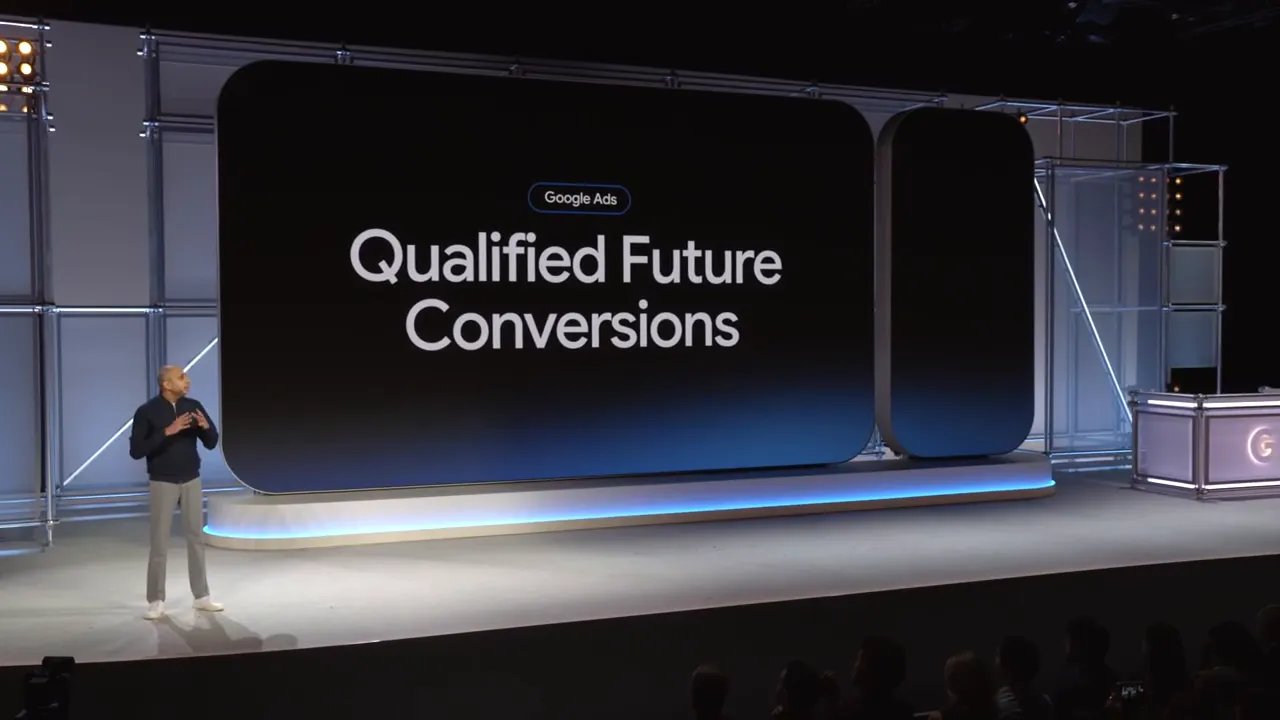
Google is bringing Meridian its open-source marketing mix model, directly into Google Analytics 360. It also introduced Qualified Future Conversions, a predictive metric that estimates future profitable outcomes instead of only counting today’s clicks. Another metric, Attributed Branded Searches, shows the short-term interest your ads create.
This is a real shift. Instead of optimising only for the last click, you can start measuring delayed decisions and long buying cycles which matters a lot for considered purchases like property, education, healthcare and B2B services across the UAE.
To get there, your data foundation has to be solid. Audit your conversion tracking, connect offline and CRM data where you can, and strengthen your first-party data. Google noted that advertisers with stronger first-party data saw around an 11% lift in incremental ROAS.
6 mistakes to avoid after Google Marketing Live 2026
- Treating AI search like an old keyword search. Long, natural questions cannot be captured with tight keyword lists alone.
- Ignoring your product feed. Weak Merchant Center data limits visibility everywhere.
- Judging YouTube only by clicks. Its real value shows up in assisted conversions and branded search lift.
- Running automation with no brand direction. AI needs your input, voice, audience, and guardrails to perform well.
- Neglecting data foundations. Poor tracking means poor optimisation, no matter how good the AI is.
- Looking only at 30-day windows. Some campaigns build value over months, not weeks.
Your 30-day action plan
You do not need to rebuild everything overnight. Here is a sensible order to work through.
Week 1
Fix the foundation. Audit your conversion tracking, review your Merchant Center feed, and connect first-party or offline data where possible.
Week 2
Upgrade campaign strategy. Check where AI Max or Performance Max fit your account, and flag any campaign that is still fully manual. If you run Dynamic Search Ads, plan for the September 2026 migration now.
Week 3
Expand creatives. Build more image and video variants and test them against your current best performers.
Week 4
Improve reporting. Add longer-term and predictive views, and start looking at YouTube beyond click metrics.
Key takeaways from Google Marketing Live 2026
- Gemini is now the operating layer of Google Ads, not just a feature.
- Search ads are becoming conversational answers, useful beats clever.
- AI Max is maturing, and Dynamic Search Ads migrate into it from September 2026.
- YouTube and Demand Gen are now genuine performance channels.
- Strong product feeds and first-party data are no longer optional.
- Measurement is shifting from last-click reporting to predictive signals.
Frequently asked questions
What is Google Marketing Live 2026?
Google Marketing Live 2026 is Google’s annual advertising event, held on 20 May 2026. It is where Google reveals new tools and updates for advertisers across Search, YouTube, Shopping and measurement.
What was announced at Google Marketing Live 2026?
The main announcements included new Gemini-powered ad formats (Conversational Discovery ads, Highlighted Answers, AI-powered Shopping ads and Business Agent for Leads), the Ask Advisor assistant, AI Max for Shopping, Asset Studio creative upgrades, and Meridian moving into Google Analytics 360.
What is Ask Advisor in Google Ads?
Ask Advisor is a Gemini-powered AI assistant that works across Google Ads, Google Analytics and Merchant Center. It helps marketers build campaigns, analyse results and handle routine tasks through natural-language requests.
Is Performance Max being replaced?
No. Performance Max remains Google’s cross-channel campaign type. AI Max for Search is a separate campaign type, and Dynamic Search Ads will migrate into AI Max, with that move becoming mandatory from September 2026.
How do these updates affect businesses in Dubai and the UAE?
UAE businesses will need cleaner product feeds, stronger first-party data and better creative to stay visible as Google’s AI takes over more of the campaign work. Manual, keyword-only accounts are now the biggest risk area.
How Leads Dubai can help
Google Marketing Live 2026 was not really about flashy features. It was a signal that the way you run ads is changing and the businesses that win will be the ones with cleaner data, better creative systems and a clear strategy guiding the AI.
That is exactly the part we handle. Leads Dubai is a Google Partner, and since 2013 we have helped over 500 businesses across the UAE get better results from their marketing. If you want a straight answer on what these updates mean for your account, talk to us. You can also explore our full range of digital marketing services in Dubai. Also check out our new AI calling services which reaches customers at scale and personalized.
Call +971 50 304 7470, or contact Leads Dubai today for a free review of your Google Ads setup.
Source: Google’s official Google Marketing Live 2026 announcements blog.google.